

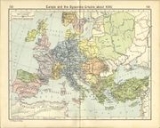
List of state leaders in 1000

Encyclopedia
Africa
- Fatimid Caliphate - Al-Hakim bi-Amr AllahAl-Hakim bi-Amr AllahAbu ‘Ali Mansur Tāriqu l-Ḥākim, called Al-Hakim bi Amr al-Lāh , was the sixth Fatimid caliph and 16th Ismaili imam .- History :...
(996-1021)- IfriqiyaIfriqiyaIn medieval history, Ifriqiya or Ifriqiyah was the area comprising the coastal regions of what are today western Libya, Tunisia, and eastern Algeria. This area included what had been the Roman province of Africa, whose name it inherited....
- Badis ibn MansurBadis ibn MansurBadis ibn Mansur was the third ruler of the Zirids in Ifriqiya .Badis ibn Mansur succeeded his father Al-Mansur ibn Buluggin as viceroy of Ifriqiya...
, ZiridZiridThe Zirid dynasty were a Sanhadja Berber dynasty, originating in modern Algeria, initially on behalf of the Fatimids, for about two centuries, until weakened by the Banu Hilal and finally destroyed by the Almohads. Their capital was Kairouan...
Viceroy (995-1016)
- Ifriqiya
- Makuria - RafaelRafael of MakuriaRafael was a ruler of the Nubian kingdom of Makuria. Contemporary writers, such as Abu Salih the Armenian, record that he constructed a palace with several domes built of red brick in the capital city, Old Dongola, around 1002, which excavations have yet to identify.-References:...
, King of Makuria (1000–1006)
Asia
- Abbasid Caliphate - Al-QadirAl-QadirAl-Qadir was the Abbasid Caliph in Baghdad from 991 to 1031. Grandson of al-Muqtadir, he was chosen in place of the deposed Caliph, at-Taʾi, his cousin. Banished from the Capital earlier, he was now recalled and appointed to the office he had long desired. He held the Caliphate for 40 years...
, Caliph of BaghdadCaliphThe Caliph is the head of state in a Caliphate, and the title for the ruler of the Islamic Ummah, an Islamic community ruled by the Shari'ah. It is a transcribed version of the Arabic word which means "successor" or "representative"...
(991-1031) - Emirate of Aleppo - Sa'id ud-Dawlah Sa'id (991-1002)
- AssamAssamAssam , also, rarely, Assam Valley and formerly the Assam Province , is a northeastern state of India and is one of the most culturally and geographically distinct regions of the country...
- Brahmapala, King of Assam (990-1010) - Emirate of Bokhara - Ismail II (999-1004)
- Buyid Empire - Firuz Abu Nasr Baha' al-DawlaBaha' al-DaulaBaha' al-Daula was the Buyid amir of Iraq , along with Fars and Kerman . He was the third son of 'Adud al-Daula....
, Emir of Iraq and Fars (988-1012) - Byzantine EmpireByzantine EmpireThe Byzantine Empire was the Eastern Roman Empire during the periods of Late Antiquity and the Middle Ages, centred on the capital of Constantinople. Known simply as the Roman Empire or Romania to its inhabitants and neighbours, the Empire was the direct continuation of the Ancient Roman State...
- Basil IIBasil IIBasil II , known in his time as Basil the Porphyrogenitus and Basil the Young to distinguish him from his ancestor Basil I the Macedonian, was a Byzantine emperor from the Macedonian dynasty who reigned from 10 January 976 to 15 December 1025.The first part of his long reign was dominated...
(976-1025) - CheraChera dynastyChera Dynasty in South India is one of the most ancient ruling dynasties in India. Together with the Cholas and the Pandyas, they formed the three principle warring Iron Age Tamil kingdoms in southern India...
- Bhaskara Ravivarman I, King of Chera (962-1019) - Chalukya - Satyasraya Irivabedanga, King of Chalukya (997-1008)
- China -
- Northern Song Dynasty - Emperor ZhenzongEmperor Zhenzong of SongEmperor Zhenzong was the third emperor of the Song Dynasty of China. He reigned from 997 to 1022. Zhenzong was the third son of Emperor Taizong. His personal name was Zhao Heng and his temple name Zhenzong means "True Ancestor".Zhenzong's reign was noted for the consolidation of power and the...
(997-1022) - Liao DynastyLiao DynastyThe Liao Dynasty , also known as the Khitan Empire was an empire in East Asia that ruled over the regions of Manchuria, Mongolia, and parts of northern China proper between 9071125...
-- Monarch - ShengzongEmperor Shengzong of LiaoEmperor Shengzong of Liao , born as Yelü Longxu , succeeded Emperor Jingzong as Emperor of the Liao Dynasty at the age of 12 in 982. As he was too young to actually rule, his mother, Empress Dowager Xiao, effectively ruled the kingdom...
, Emperor of LiaoTable of Chinese monarchsThe following list of Chinese monarchs is in no way comprehensive. From the Shang Dynasty to the Qin Dynasty, rulers usually held the title "King"...
(983-1031) - de facto - Empress Xiao (982-1009)
- Monarch - Shengzong
- Kingdom of DaliKingdom of DaliDali or Great Li was a Bai kingdom centred in what is now Yunnan Province of China. Established by Duan Siping in 937, it was ruled by a succession of 22 kings until the year 1253, when it was conquered by an invasion of the Mongol Empire. The capital city was at Dali.- History :The Kingdom of...
- Duan Suying (986-1009) - Western XiaWestern XiaThe Western Xia Dynasty or the Tangut Empire, was known to the Tanguts and the Tibetans as Minyak.The state existed from 1038 to 1227 AD in what are now the northwestern Chinese provinces of Ningxia, Gansu, eastern Qinghai, northern Shaanxi, northeastern Xinjiang, southwest Inner Mongolia, and...
- Li JiqianLi JiqianLi Jiqian resisted the Song empire and organized a rebellion in 984. He created a successful alliance with the Liao empire for military support. Li Jiqian arranged a peace agreement with the Song emperor, but violated the treaty himself...
, King of Xia (984-1004)
- Northern Song Dynasty - Emperor Zhenzong
- Chola - Raja Raja Chola I, King of Chola (985-1012)
- Emirate of Ghazni - MahmudMahmud of GhazniMahmud of Ghazni , actually ', was the most prominent ruler of the Ghaznavid dynasty who ruled from 997 until his death in 1030 in the eastern Iranian lands. Mahmud turned the former provincial city of Ghazni into the wealthy capital of an extensive empire which covered most of today's Iran,...
(998-1030) - Gujarat - Chamundaraja, King of Gujarat (995-1010)
- Japan (Heian period)Heian periodThe is the last division of classical Japanese history, running from 794 to 1185. The period is named after the capital city of Heian-kyō, or modern Kyōto. It is the period in Japanese history when Buddhism, Taoism and other Chinese influences were at their height...
-- Monarch - Emperor IchijōEmperor Ichijowas the 66th emperor of Japan, according to the traditional order of succession.Ichijō's reign spanned the years from 986 to 1011.-Traditional narrative:Before he ascended to the Chrysanthemum Throne, his personal name was Kanehito-shinnō....
(986-1011) - de facto - Fujiwara no MichinagaFujiwara no Michinagarepresents the highpoint of the Fujiwara regents' control over the government of Japan.-Early life:He was the fourth or fifth son of Fujiwara no Kaneie by his wife Tokihime, daughter of Fujiwara no Nakamasa...
(995-1017)
- Monarch - Emperor Ichijō
- Korea (Goryeo Kingdom)GoryeoThe Goryeo Dynasty or Koryŏ was a Korean dynasty established in 918 by Emperor Taejo. Korea gets its name from this kingdom which came to be pronounced Korea. It united the Later Three Kingdoms in 936 and ruled most of the Korean peninsula until it was removed by the Joseon dynasty in 1392...
- MokjongMokjong of GoryeoMokjong of Goryeo was the seventh ruler of the Goryeo dynasty of Korea.-Reign:Mokjong is known for his reform of the Jeonsigwa , and for a plot by his mother, Queen Honae and Kim Chi-yang to overthrow him...
(997-1009) - Malwa - Sindhuraja, King of Malwa (995-1010)
- ManipurManipurManipur is a state in northeastern India, with the city of Imphal as its capital. Manipur is bounded by the Indian states of Nagaland to the north, Mizoram to the south and Assam to the west; it also borders Burma to the east. It covers an area of...
- Kainou Irengba, King of Manipur (983-1073) - Kingdom of Mataram - DharmawangsaDharmawangsaDharmawangsa was the last raja of the Kingdom of Medang from 990-1006 CE. He succeeded Sri Makutawangsawardhana. Dharmawangsa was the patron of the translator of the Mahabarata text into Old Javanese...
(985-1006) - Emirate of Mosul - Husan ud-Dawlah al-Muqallad (996-1001)
- Emirate of Multan - Nasr ibn Hamid (997-?)
- OrissaOrissaOrissa , officially Odisha since Nov 2011, is a state of India, located on the east coast of India, by the Bay of Bengal. It is the modern name of the ancient nation of Kalinga, which was invaded by the Maurya Emperor Ashoka in 261 BC. The modern state of Orissa was established on 1 April...
-- Yayati Mahsivagupta I, King of Orissa (970-1000)
- Bhimaratha Mahabhavagupta, King of Orissa (1000–1015)
- PalaPala EmpireThe Pāla Empire was one of the major middle kingdoms of India existed from 750–1174 CE. It was ruled by a Buddhist dynasty from Bengal in the eastern region of the Indian subcontinent, all the rulers bearing names ending with the suffix Pala , which means protector. The Palas were often described...
- Mahiapala I, King of Pala (988-1038) - Persia - Shams al-Mo'ali Abol-hasan Ghaboos ibn WushmgirShams al-Mo'ali Abol-hasan Ghaboos ibn WushmgirQabus ibn Wushmagir Qabus ibn Wushmagir Qabus ibn Wushmagir (full name and honorific abol-ḥasan qābūs ben wušmagīr ibn ziyar šams al-maʿālī, ; (r. 977–981; 997–1012, d. 1012) was the Ziyarid ruler of Gurgan and Tabaristan in medieval Iran...
(976-1012) of the ZiyaridZiyaridThe Ziyarids, also spelled Zeyarids , were an Iranian dynasty that ruled in the Caspian sea provinces of Gorgan and Mazandaran from 928-1043 . The founder of the dynasty was Mardavij , who took advantage of a rebellion in the Samanid army of Iran to seize power in northern Iran...
s - PratiharaPratiharaThe Gurjara Pratihara , often simply called Pratihara Empire, was an imperial Indian dynasty that ruled much of Northern India from the 6th to the 11th centuries. At its peak of prosperity and power , the Gurajara-Pratihara Empire rivaled or even exceeded the Gupta Empire in the extent of its...
- RajyapalaRajyapalaRajyapala was the seventh emperor of the Pala dynasty. He succeeded his father Narayanapala. He reigned for 32 years. The Bargaon inscription is dated in his 24th regnal year. He was succeeded by his son Gopala II....
, King of Pratihara (c.990-1018) - Saurashtra - Kawat I, King of Saurashtra (982-1003)
- SindSindhSindh historically referred to as Ba'ab-ul-Islam , is one of the four provinces of Pakistan and historically is home to the Sindhi people. It is also locally known as the "Mehran". Though Muslims form the largest religious group in Sindh, a good number of Christians, Zoroastrians and Hindus can...
- Member of the Hibari clan, Emir of Sind (dynasty ruled 850-1005) - Emirate of Transoxiana - Ahmad Nasr al-Haqq Qutb ad-Dawla (998-1017)
- Western Ganga - Rakkasa Ganga, King of Western Ganga (985-1024)
Europe

- BulgariaFirst Bulgarian EmpireThe First Bulgarian Empire was a medieval Bulgarian state founded in the north-eastern Balkans in c. 680 by the Bulgars, uniting with seven South Slavic tribes...
- Samuil, Tsar of Bulgaria (977–1014) - Kingdom of BurgundyKingdom of BurgundyBurgundy is a historic region in Western Europe that has existed as a political entity in a number of forms with very different boundaries. Two of these entities - the first around the 6th century, the second around the 11th century - have been called the Kingdom of Burgundy; a third was very...
- Rudolf III (993–1032)- County of BurgundyCounty of BurgundyThe Free County of Burgundy , was a medieval county , within the traditional province and modern French region Franche-Comté, whose very French name is still reminiscent of the unusual title of its count: Freigraf...
- Otto-William (982–1026) - County of Provence -
- Rotbold II (968–1008)
- William IIWilliam II of ProvenceWilliam II , called the Pious, was the Count of Provence, succeeded his father, William I, on the latter's retirement to a monastery just before his death in late 993. He did not succeed in the margravial title, which went to his uncle Rotbold II...
(993–1018)
- County of Burgundy
- Byzantine EmpireByzantine EmpireThe Byzantine Empire was the Eastern Roman Empire during the periods of Late Antiquity and the Middle Ages, centred on the capital of Constantinople. Known simply as the Roman Empire or Romania to its inhabitants and neighbours, the Empire was the direct continuation of the Ancient Roman State...
- Basil II the Bulgar-slayerBasil IIBasil II , known in his time as Basil the Porphyrogenitus and Basil the Young to distinguish him from his ancestor Basil I the Macedonian, was a Byzantine emperor from the Macedonian dynasty who reigned from 10 January 976 to 15 December 1025.The first part of his long reign was dominated...
(976–1025) - CaucasusCaucasusThe Caucasus, also Caucas or Caucasia , is a geopolitical region at the border of Europe and Asia, and situated between the Black and the Caspian sea...
- Bagratuni Kingdom of ArmeniaBagratuni Kingdom of ArmeniaThe medieval Kingdom of Armenia, also known as Bagratid Armenia , was an independent state established by Ashot I Bagratuni in 885 following nearly two centuries of foreign domination of Greater Armenia under Arab Umayyad and Abbasid rule...
- Gagik IGagik I of ArmeniaGagik I was king of the Bagratuni Kingdom of Armenia. He succeeded his brother Smbat II the Conqueror . Armenia reached its zenith during the reign of Gagik.-Rule:...
(989–1020) - Kingdom of GeorgiaKingdom of GeorgiaThe Kingdom of Georgia was a medieval monarchy established in AD 978 by Bagrat III.It flourished during the 11th and 12th centuries, the so-called "golden age" of the history of Georgia. It fell to the Mongol invasions of the 13th century, but managed to re-assert sovereignty by 1327...
- Gurgen (994–1008) - Principality of Kakheti - DavidDavid of KakhetiDavid was a prince and chorepiscopus of Kakheti in eastern Georgia from 976 to 1010; son and successor of Kvirike II. A major menace to his rule came from the Georgian Bagratid king Bagrat III who had unified the core Georgian polities under his crown and sought to incorporate Kakheti into his...
(976–1010) - KlarjetiTao-KlarjetiTao-Klarjeti is the term conventionally used in modern history writing to describe the historic south-western Georgian principalities, now forming part of north-eastern Turkey and divided among the provinces of Erzurum, Artvin, Ardahan and Kars...
- Sumbat III, Prince of KlarjetiSumbat III of KlarjetiSumbat III was a Georgian prince of the Bagrationi dynasty of Tao-Klarjeti and the last sovereign of Klarjeti from 993 until being dispossessed by King Bagrat III of Georgia in 1011....
(993–1011)
- Bagratuni Kingdom of Armenia
- Kingdom of CroatiaKingdom of Croatia (medieval)The Kingdom of Croatia , also known as the Kingdom of the Croats , was a medieval kingdom covering most of what is today Croatia and Bosnia and Herzegovina in the Balkans.Established in 925, it ruled as a sovereign state for almost two centuries...
-- Svetoslav SuronjaSvetoslav SuronjaSvetoslav Suronja was King of Croatia from 997 to 1000. He was a member of House of Trpimirović. He reigned with the help of his Ban, Varda. His name was Svetoslav, but because of his physiology and, probably, his temper, he was nicknamed Suronja which could be translated as dark man or cold man....
(997–1000) - Krešimir IIIKrešimir III of CroatiaKrešimir III was a King of Croatia in 1000–1030 from the House of Trpimirović and founder of its cadet line House of Krešimirović. He was the middle son of former King Stjepan Držislav. Until 1020, he co-ruled with his brother Gojslav.-Reign:...
co-King (1000–1030) - GojslavGojslav of CroatiaGojslav was a monarch who co-ruled the Kingdom of Croatia with his brother Krešimir III from 1000 to his death in 1020. He was the youngest son of the former Croatian King Stjepan Držislav and a member of royal House of Trpimirović.- Revolt and reign :...
co-King (1000–1020)
- Svetoslav Suronja
- Kingdom of DenmarkKingdom of DenmarkThe Kingdom of Denmark or the Danish Realm , is a constitutional monarchy and sovereign state consisting of Denmark proper in northern Europe and two autonomous constituent countries, the Faroe Islands in the North Atlantic and Greenland in North America. Denmark is the hegemonial part, where the...
- Sweyn ISweyn I of DenmarkSweyn I Forkbeard was king of Denmark and England, as well as parts of Norway. His name appears as Swegen in the Anglo-Saxon Chronicle and he is also known in English as Svein, Swein, Sven the Dane, and Tuck.He was a Viking leader and the father of Cnut the Great...
(985/986–1014) - Kingdom of EnglandKingdom of EnglandThe Kingdom of England was, from 927 to 1707, a sovereign state to the northwest of continental Europe. At its height, the Kingdom of England spanned the southern two-thirds of the island of Great Britain and several smaller outlying islands; what today comprises the legal jurisdiction of England...
- Æthelred the Unready (978–1013) - Kingdom of FranceKingdom of FranceThe Kingdom of France was one of the most powerful states to exist in Europe during the second millennium.It originated from the Western portion of the Frankish empire, and consolidated significant power and influence over the next thousand years. Louis XIV, also known as the Sun King, developed a...
- Robert IIRobert II of FranceRobert II , called the Pious or the Wise , was King of France from 996 until his death. The second reigning member of the House of Capet, he was born in Orléans to Hugh Capet and Adelaide of Aquitaine....
(996–1031)- County of Angoulême - William IVWilliam II of AngoulêmeWilliam Taillefer , numbered William II or William IV , was the Count of Angoulême from 987. He stood at the head of the family which controlled not only the Angoumois, but also the Agenais and part of Saintonge...
(988–1028) - County of Anjou - Fulk III (987–1040)
- Duchy of Aquitaine - William V (995–1030)
- County of Blois - Theobald IITheobald II of BloisTheobald II, Count of Blois was the eldest son and heir of Odo I, Count of Blois, and Bertha of Burgundy.He became Count of Blois, Châteaudun, Chartres and Reims after the death of his father in 996. He left no heirs; on his death, he was succeeded by his younger brother, Odo II, Count of Blois....
(995–1004) - Duchy of Brittany - Geoffrey IGeoffrey I, Duke of BrittanyGeoffrey I of Rennes was duke of Brittany, from 992 to his death. He was son of Duke Conan I and Ermengarde of Anjou, whose parents were Geoffrey I of Anjou and Adele of Meaux....
(992–1008) - Duchy of BurgundyDuchy of BurgundyThe Duchy of Burgundy , was heir to an ancient and prestigious reputation and a large division of the lands of the Second Kingdom of Burgundy and in its own right was one of the geographically larger ducal territories in the emergence of Early Modern Europe from Medieval Europe.Even in that...
- Eudes-Henry (965–1002) - County of FlandersCounty of FlandersThe County of Flanders was one of the territories constituting the Low Countries. The county existed from 862 to 1795. It was one of the original secular fiefs of France and for centuries was one of the most affluent regions in Europe....
- Baldwin IVBaldwin IV, Count of FlandersBaldwin IV of Flanders , known as the Bearded, was Count of Flanders from 988 until his death. He was the son of Arnulf II, Count of Flanders...
(987–1035) - County of Maine - Hugh III (992–1015)
- Duchy of NormandyDuchy of NormandyThe Duchy of Normandy stems from various Danish, Norwegian, Hiberno-Norse, Orkney Viking and Anglo-Danish invasions of France in the 9th century...
- Richard IIRichard II, Duke of NormandyRichard II , called the Good , was the eldest son and heir of Richard I the Fearless and Gunnora.-Biography:...
(996–1026) - County of Toulouse - William III Taillefer (978–1037)
- County of Vermandois -
- Herbert III (987–1000)
- Albert II (c. 1000–1010)
- County of Angoulême - William IV
- Duchy of Gascony - Bernard I William (996–1009)
- Holy Roman EmpireHoly Roman EmpireThe Holy Roman Empire was a realm that existed from 962 to 1806 in Central Europe.It was ruled by the Holy Roman Emperor. Its character changed during the Middle Ages and the Early Modern period, when the power of the emperor gradually weakened in favour of the princes...
- Otto IIIOtto III, Holy Roman EmperorOtto III , a King of Germany, was the fourth ruler of the Saxon or Ottonian dynasty of the Holy Roman Empire. He was elected King in 983 on the death of his father Otto II and was crowned Holy Roman Emperor in 996.-Early reign:...
(996–1002)- Duchy of BavariaDuchy of BavariaThe Duchy of Bavaria was the only one of the stem duchies from the earliest days of East Francia and the Kingdom of Germany to preserve both its name and most of its territorial extent....
- Henry IVHenry II, Holy Roman EmperorHenry II , also referred to as Saint Henry, Obl.S.B., was the fifth and last Holy Roman Emperor of the Ottonian dynasty, from his coronation in Rome in 1014 until his death a decade later. He was crowned King of the Germans in 1002 and King of Italy in 1004...
(995–1005)- March of AustriaMarch of AustriaThe March of Austria was created in 976 out of the territory that probably formed the earlier March of Pannonia. It is also called the Margraviate of Austria or the Bavarian Eastern March. In contemporary Latin, it was the marchia Austriae, Austrie marchionibus, or the marcha Orientalis...
- Henry IHenry I, Margrave of AustriaHenry I of Austria , also known as Henry the Strong , was margrave of Austria from 994 until his death.He is the son of Margrave Leopold I from the Babenberg family...
(994–1018) - March of the Nordgau - Henry of SchweinfurtHenry of SchweinfurtHenry of Schweinfurt was the Margrave of the Nordgau from 994 until 1004. He was called the "glory of eastern Franconia" by his own cousin, the chronicler Thietmar of Merseburg....
(994–1004)
- March of Austria
- Duchy of Bohemia - Boleslav III (999–1002)
- Duchy of CarinthiaDuchy of CarinthiaThe Duchy of Carinthia was a duchy located in southern Austria and parts of northern Slovenia. It was separated from the Duchy of Bavaria in 976, then the first newly created Imperial State beside the original German stem duchies....
- Henry IVHenry II, Holy Roman EmperorHenry II , also referred to as Saint Henry, Obl.S.B., was the fifth and last Holy Roman Emperor of the Ottonian dynasty, from his coronation in Rome in 1014 until his death a decade later. He was crowned King of the Germans in 1002 and King of Italy in 1004...
(995–1002) - Duchy of Lower Lorraine - OttoOtto, Duke of Lower LorraineOtto was the duke of Lower Lorraine from 993 until his death. He was the son of Charles, son of King Louis IV, and his first wife, a daughter of Robert de Vermandois, count of Meaux and Troyes....
(977–1012)- County of Frisia - Dirk IIIDirk III, Count of HollandDirk III was Count of Holland from 993 to May 27, 1039, until 1005 under regency of his mother. It is thought that Dirk III went on pilgrimage to the Holy Land around 1030, hence his nickname of Hierosolymita....
(993–1039) - County of Mons - Reginar IVReginar IV, Count of MonsRegnier IV, Count of Mons was the son of Reginar III, Count of Hainaut. Lambert I of Leuven was his brother.-History:His father was Count of Hainaut until 958, but fell in disgrace with Otto I, Holy Roman Emperor and lost his County to Godfrey I, Duke of Lower Lorraine.He received the County of...
(998–1013) - County of Namur - Albert IAlbert I, Count of NamurAlbert I was the son of Robert I, Count of Lomme. He became Count of Namur in 998.He married Ermengarde, daughter of Charles, Duke of Lower Lorraine, and had three children:*Liutgard of Namur*Albert II, Count of Namur...
(c. 981–1011)
- County of Frisia - Dirk III
- Duchy of Upper Lorraine - Theodoric I (978–1026/1027)
- County of Bar - Theodoric I (978–1026/1027)
- County of Luxembourg - Henry I (998–1026)
- County Palatine of Lotharingia - Ezzo (996–1034)
- Duchy of SaxonyDuchy of SaxonyThe medieval Duchy of Saxony was a late Early Middle Ages "Carolingian stem duchy" covering the greater part of Northern Germany. It covered the area of the modern German states of Bremen, Hamburg, Lower Saxony, North Rhine-Westphalia, and Saxony-Anhalt and most of Schleswig-Holstein...
- Bernard IBernard I, Duke of SaxonyBernard I was the duke of Saxony , the second of the Billung dynasty, a son of Duke Herman and Oda. He extended his father's power considerably....
(973–1011)- Saxon Eastern MarchSaxon Eastern MarchThe Saxon Eastern March or Ostmark was a march of the Holy Roman Empire from the 10th until the 12th century. The term "eastern march" or "ostmark" comes from the Latin term marchia Orientalis and originally could refer to either a march created on the eastern frontier of the Duchy of Saxony or...
- Gero IIGero II, Margrave of the Saxon OstmarkGero II was the eldest son of Thietmar, Margrave of Meissen, and Schwanehilde , daughter of Herman, Duke of Saxony. He was therefore probably a grandson of Hidda and Christian of Thuringia and named for his great uncle Gero the Great...
(993–1015) - Northern MarchNorthern MarchThe Northern March or North March was created out of the division of the vast Marca Geronis in 965. It initially comprised the northern third of the Marca and was part of the territorial organisation of areas conquered from the Wends...
- LothairLothair, Margrave of the NordmarkLothair was a Saxon count and Margrave of the Northern March from about 983 until his death.Born the eldest son of Count Lothair II of Walbeck and Matilda von Arneburg, he succeeded his father as Count Lothair III of Walbeck in 964...
(983–1003) - March of Meissen - Ekkehard I (985–1002)
- Saxon Eastern March
- Duchy of SwabiaDuchy of SwabiaSwabia was one of the five stem duchies of the medieval German kingdom, and its dukes were thus among the most powerful magnates of Germany.-History:...
- Hermann II (997–1003)
- Duchy of Bavaria
- Kingdom of HungaryKingdom of HungaryThe Kingdom of Hungary comprised present-day Hungary, Slovakia and Croatia , Transylvania , Carpatho Ruthenia , Vojvodina , Burgenland , and other smaller territories surrounding present-day Hungary's borders...
- Stephen I (1000–1038) - Ireland - Máel Sechnaill mac DomnaillMáel Sechnaill mac DomnaillMáel Sechnaill mac Domnaill , also called Máel Sechnaill Mór, Máel Sechnaill II, anglicized Malachy II, was King of Mide and High King of Ireland...
, High King of Ireland (980–1002)- AilechAilechAilech was a medieval kingdom in Ireland, roughly centred on modern-day County Tyrone and the Inishowen peninsula in Ulster....
- Áed mac Domnaill Ua Néill, King of Ailech (989–1004) - ConnachtConnachtConnacht , formerly anglicised as Connaught, is one of the Provinces of Ireland situated in the west of Ireland. In Ancient Ireland, it was one of the fifths ruled by a "king of over-kings" . Following the Norman invasion of Ireland, the ancient kingdoms were shired into a number of counties for...
- Cathal mac Conchobar mac TaidgCathal mac Conchobar mac Taidg-Family tree: Cathal mac Conchobar mac Taidg, d. 1010. | |__________________________________________________________________________________________________...
, King of ConnachtKings of ConnachtThe Kings of Connacht were rulers of the cóiced of Connacht, which lies west of the River Shannon, Ireland. However, the name only became applied to it in the early medieval era, being named after The Connachta.The old name for the province was Cóiced Ol nEchmacht . Ptolemy's map of c. 150 AD...
(973–1010) - Uí Maine - Tadhg Mór Ua CellaighTadhg Mór Ua Cellaigh-Background:Ua Cellaigh was the first King of Uí Maine to bear the surnmae Ua Cellaigh, derived from his grandfather, Ceallach mac Finnachta, who was in turn a sixth-generation descendant of Eoghan Finn, a descendant of the first king, Maine Mór...
, King of Uí Maine (985–1014) - LeinsterLeinsterLeinster is one of the Provinces of Ireland situated in the east of Ireland. It comprises the ancient Kingdoms of Mide, Osraige and Leinster. Following the Norman invasion of Ireland, the historic fifths of Leinster and Mide gradually merged, mainly due to the impact of the Pale, which straddled...
- Donnchad mac Domnall ClaenDonnchad mac Domnall ClaenDonnchad mac Dómnaill Clóen was the tenth and last King of Leinster to be inaugurated and based on Lyons Hill, Ardclough, County Kildare. He was a member of the Uí Dúnchada, one of three septs of the Uí Dúnlainge dynasty which rotated the kingship of Leinster between 750 - 1050 and is a...
, King of LeinsterKings of LeinsterThe following is a provisional list of the kings of Leinster who ruled the Irish kingdom of Leinster up to 1632 with the death of Domhnall Spainnach MacMurrough-Kavanagh, the last legitimately inaugurated head of the MacMurrough Kavanagh royal line...
(984–1003) - Kingdom of MideKingdom of MideMide , spelt Midhe in modern Irish and anglicised as Meath, was a medieval kingdom in Ireland for over 1,000 years. Its name means "middle", denoting the fact that lay in the middle of Ireland....
- Máel Sechnaill mac DomnaillMáel Sechnaill mac DomnaillMáel Sechnaill mac Domnaill , also called Máel Sechnaill Mór, Máel Sechnaill II, anglicized Malachy II, was King of Mide and High King of Ireland...
(c. 975–1022) - MunsterMunsterMunster is one of the Provinces of Ireland situated in the south of Ireland. In Ancient Ireland, it was one of the fifths ruled by a "king of over-kings" . Following the Norman invasion of Ireland, the ancient kingdoms were shired into a number of counties for administrative and judicial purposes...
- Brian Boru, King of Munster (978–1014)
- Ailech
- Kingdom of ItalyKingdom of Italy (medieval)The Kingdom of Italy was a political entity under control of Carolingian dynasty of Francia first, after the defeat of the Lombards in 774. It was finally incorporated as a part of the Holy Roman Empire in 962....
- Otto IIIOtto III, Holy Roman EmperorOtto III , a King of Germany, was the fourth ruler of the Saxon or Ottonian dynasty of the Holy Roman Empire. He was elected King in 983 on the death of his father Otto II and was crowned Holy Roman Emperor in 996.-Early reign:...
- Duchy of AmalfiDuchy of AmalfiThe Duchy of Amalfi or the Republic of Amalfi was a de facto independent state centred on the Southern Italian city of Amalfi during the 10th and 11th centuries. The city and its territory were originally part of the larger ducatus Neapolitanus, governed by a patrician, but it extracted itself...
- Manso IManso I of AmalfiManso I was the duke of Amalfi and prince of Salerno . He was the son of Duke Sergius I and the greatest independent ruler of Amalfi, which he controlled for nearly half a century...
(966–1004) - Principality of Benevento - Pandulf IIPandulf II of BeneventoPandulf II the Old was the prince of Benevento from 981 and prince of Capua from 1008 or 1009 to his death, the son of Landulf III who was co-prince between 959 and 968...
(981–1014) - Principality of CapuaPrincipality of CapuaThe Principality of Capua was a Lombard state in Southern Italy, usually de facto independent, but under the varying suzerainty of Western and Eastern Roman Empires. It was originally a gastaldate, then a county, within the principality of Salerno....
- Landulf VIILandulf VII of CapuaLandulf VII , also numbered Landulf IV or V , called Landolfo di Sant'Agata, was the prince of Capua from 1000 to his death. He was the second son of Landulf III of Benevento, who was only ever a co-ruler. Thus, he was easily removed from the succession on his father's death...
(999–1007) - Catepanate of Italy - Gregory TarchaneiotesGregory TarchaneiotesGregory Tarchaneiotes was a protospatharius and the long-reigning catepan of Italy from 998 to 1006. In December 999, and again on February 2, 1002, he reinstituted and confirmed the possessions of the abbey and monks of Monte Cassino in Ascoli. In 1004, he fortified and expanded the castle of...
(998–1006) - Duchy of GaetaDuchy of GaetaThe Duchy of Gaeta was an early medieval state centred on the coastal South Italian city of Gaeta. It began in the early ninth century as the local community began to grow autonomous as Byzantine power lagged in the Mediterranean and the peninsula thanks to Lombard and Saracen incursions.Our...
- John IIIJohn III of GaetaJohn III was the consul and duke of Gaeta from some time between October 984 and January 986 until his death.He was the eldest son of Marinus II, who succeeded his brother Gregory in 978 and immediately appointed John as co-duke in order to assure his inheritance, as the precedent of fraternal...
(984–1008) - March of IvreaMarch of IvreaThe March of Ivrea was a large frontier county in the northwest of the medieval Italian kingdom from the late 9th to the early 11th century. Its capital was Ivrea in present-day Piedmont, and it was held by a Burgundian family of margraves called the Anscarids...
- ArduinArduin of ItalyArduin of Ivrea was Margrave of Ivrea and King of Italy. He was the son of Dado, Count of Pombia. Arduin succeeded to the northern Italian Margraviate of Ivrea in 990 on dubious grounds. He was excommunicated for the murder of the Bishop of Vercelli in 997.He was made King of Italy after the death...
(c. 990–1015) - March of MontferratMarch of MontferratThe March of Montferrat was frontier march of the Kingdom of Italy during the Middle Ages and state of the Holy Roman Empire...
- William IIIWilliam III, Marquess of MontferratWilliam III was the Margrave of Montferrat and Count of Vado from 991 to his death. He was the eldest son and successor of Otto I. William I and II were the father and son respectively of Aleram, the first margrave, but neither served as margrave himself.William's religious policy was a...
(991–1042) - Duchy of NaplesDuchy of NaplesThe Duchy of Naples began as a Byzantine province that was constituted in the seventh century, in the reduced coastal lands that the Lombards had not conquered during their invasion of Italy in the sixth century...
- John IVJohn IV of NaplesJohn IV was the mostly absentee duke of Naples from 997 to after 1002. He was the son and successor of Sergius III. John IV originally recognised the suzerainty of the Byzantine Emperor....
(997–1002) - Papal StatesPapal StatesThe Papal State, State of the Church, or Pontifical States were among the major historical states of Italy from roughly the 6th century until the Italian peninsula was unified in 1861 by the Kingdom of Piedmont-Sardinia .The Papal States comprised territories under...
- Pope Silvester IIPope Silvester IIPope Sylvester II , born Gerbert d'Aurillac, was a prolific scholar, teacher, and Pope. He endorsed and promoted study of Arab/Greco-Roman arithmetic, mathematics, and astronomy, reintroducing to Europe the abacus and armillary sphere, which had been lost to Europe since the end of the Greco-Roman...
(999–1003) - Principality of SalernoPrincipality of SalernoThe Lombard Principality of Salerno was a South Italian state, centered on the port city of Salerno, formed in 851 out of the Principality of Benevento after a decade-long civil war....
- Guaimar IIIGuaimar III of SalernoGuaimar III was duke of Salerno from around 994 to his death. His date of death is sometimes given as 1030 or 1031, but the most reliable sources consistently indicate 1027. Under his reign, Salerno entered an era of great splendour...
(994–1027) - Emirate of SicilyEmirate of SicilyThe Emirate of Sicily was an Islamic state on the island of Sicily , which existed from 965 to 1072.-First Arab invasions of Sicily:...
- Ja'far al-Kalbi (998–1019) - March of TuscanyMarch of TuscanyThe March of Tuscany or Tuscia was a frontier march in central Italy, bordering the Papal States to the south and east, the Ligurian Sea to the west, and the rest of the Kingdom of Italy to the north. It was a Carolingian creation, a successor of the Lombard Duchy of Tuscia...
- HughHugh of TuscanyHugh the Great was the Margrave of Tuscany from 961 to his death and Duke of Spoleto and Camerino from 989 to 996. He was the son and successor of Humbert of Tuscany, who was also briefly Duke of Spoleto, and Willa, a daughter of Boniface I of Spoleto...
(961–1001) - Republic of VeniceRepublic of VeniceThe Republic of Venice or Venetian Republic was a state originating from the city of Venice in Northeastern Italy. It existed for over a millennium, from the late 7th century until 1797. It was formally known as the Most Serene Republic of Venice and is often referred to as La Serenissima, in...
- Pietro II Orseolo, Doge of VenicePietro II OrseoloPietro II Orseolo was the Doge of Venice from 991 to 1009.He began the period of eastern expansion of Venice that lasted for the better part of 500 years...
(991–1009)
- Duchy of Amalfi
- Kievan Rus'Kievan Rus'Kievan Rus was a medieval polity in Eastern Europe, from the late 9th to the mid 13th century, when it disintegrated under the pressure of the Mongol invasion of 1237–1240....
- Vladimir IVladimir I of KievVladimir Sviatoslavich the Great Old East Slavic: Володимѣръ Свѧтославичь Old Norse as Valdamarr Sveinaldsson, , Vladimir, , Volodymyr, was a grand prince of Kiev, ruler of Kievan Rus' in .Vladimir's father was the prince Sviatoslav of the Rurik dynasty...
(980–1015)- Principality of Polotsk - IzyaslavIzyaslav of PolotskIzyaslav was the son of Vladimir I of Kiev and Rogneda of Polotsk.Following Norse tradition, Izyaslav was sent with his mother to rule her homeland. There is also a legend that Rogneda tried to get Izyaslav to slay his father....
(989–1001) - Principality of Rostov - Yaroslav I the WiseYaroslav I the WiseYaroslav I, Grand Prince of Rus, known as Yaroslav the Wise Yaroslav I, Grand Prince of Rus, known as Yaroslav the Wise Yaroslav I, Grand Prince of Rus, known as Yaroslav the Wise (Old Norse: Jarizleifr; ; Old East Slavic and Russian: Ярослав Мудрый; Ukrainian: Ярослав Мудрий; c...
(996–1010) - Principality of Turov - Sviatopolk VladimirovichSviatopolk I of KievSviatopolk I Vladimirovich was the Kniaz' of Turov and Velikii Kniaz of Kiev whose paternity and guilt in the murder of brothers are disputed.-Early life:Sviatopolk's mother was a Greek nun captured by Sviatoslav I in Bulgaria and married to his lawful heir...
(997–1019)
- Principality of Polotsk - Izyaslav
- Kingdom of Norway -
- Olaf IOlaf I of NorwayOlaf Tryggvason was King of Norway from 995 to 1000. He was the son of Tryggvi Olafsson, king of Viken , and, according to later sagas, the great-grandson of Harald Fairhair, first King of Norway.Olaf played an important part in the often forcible, on pain of torture or death, conversion of the...
(995–1000) - Sveinn HákonarsonSveinn HákonarsonSveinn Hákonarson was an earl of the house of Hlaðir and co-ruler of Norway from 1000 to c. 1015. He was the son of earl Hákon Sigurðarson. He is first mentioned in connection with the battle of Hjörungavágr, where the Heimskringla says he commanded 60 ships...
, Regent (1000–c. 1015) - Eiríkr HákonarsonEiríkr HákonarsonEiríkr Hákonarson or Eric of Norway or Eric of Hlathir was earl of Lade, ruler of Norway and earl of Northumbria.-Background:...
, Regent (1000–1012) - Sweyn ISweyn I of DenmarkSweyn I Forkbeard was king of Denmark and England, as well as parts of Norway. His name appears as Swegen in the Anglo-Saxon Chronicle and he is also known in English as Svein, Swein, Sven the Dane, and Tuck.He was a Viking leader and the father of Cnut the Great...
(1000–1014)
- Olaf I
- Poland - Bolesław I the Brave, Duke of Poland (992–1025)
- Kingdom of AlbaKingdom of AlbaThe name Kingdom of Alba pertains to the Kingdom of Scotland between the deaths of Donald II in 900, and of Alexander III in 1286 which then led indirectly to the Scottish Wars of Independence...
(Scotland) - Kenneth IIIKenneth III of ScotlandCináed mac Duib anglicised as Kenneth III, and nicknamed An Donn, "the Chief" or "the Brown", was King of Scots from 997 to 1005. He was the son of Dub...
(997–1005) - Serbia -
- Petrislav, (c. 992–1000)
- Jovan VladimirJovan VladimirJovan Vladimir or John Vladimir was ruler of Duklja, the most powerful Serbian principality of the time, from around 1000 to 1016. He ruled during the protracted war between the Byzantine Empire and the First Bulgarian Empire...
(c. 1000–1016)
- Spain -
- County of Barcelona - Ramon BorrellRamon Borrell, Count of BarcelonaRaymond Borrel , was count of Barcelona, Girona, and Ausona from 992. Son of Borrell II of Barcelona and Letgarda de Rouergue. He was associated with his father from 988....
(993–1017) - County of Castile - Sancho García (995–1017)
- Caliphate of CórdobaCaliphate of CórdobaThe Caliphate of Córdoba ruled the Iberian peninsula and part of North Africa, from the city of Córdoba, from 929 to 1031. This period was characterized by remarkable success in trade and culture; many of the masterpieces of Islamic Iberia were constructed in this period, including the famous...
-- Hisham IIHisham IIHisham II was the third Caliph of Cordoba, of the Umayyad dynasty. He ruled 976–1009, and 1010–1013 in the Al-Andalus ....
(976–1009) - Al-Mansur Ibn Abi AamirAl-Mansur Ibn Abi AamirAbu Aamir Muhammad Ibn Abdullah Ibn Abi Aamir, Al-Hajib Al-Mansur , better known as Almanzor, was the de facto ruler of Muslim Al-Andalus in the late 10th to early 11th centuries. His rule marked the peak of power for Moorish Iberia.-Origins:He was born Muhammad Ibn Abi Aamir, into a noble Arab...
, HajibHajibThe term "hajib" is not to be confused with the word "hijab", which is a headscarf for Muslim women.A hajib was a government official in Al-Andalus and Egypt. They began as treasurers or Chamberlains but by 756, the position had evolved to be equivalent to a vizier or higher....
(978–1002)
- Hisham II
- Kingdom of LeónKingdom of LeónThe Kingdom of León was an independent kingdom situated in the northwest region of the Iberian Peninsula. It was founded in AD 910 when the Christian princes of Asturias along the northern coast of the peninsula shifted their capital from Oviedo to the city of León...
- Alfonso VAlfonso V of LeónAlfonso V , called the Noble, was King of León from 999 to 1028. He was the son of Bermudo II by his second wife Elvira García of Castile. The Abbot Oliva called him "Emperor of Spain"....
(999–1028)- County of PortugalCounty of PortugalThe County of Portugal was the region around Braga and Porto, today corresponding to littoral northern Portugal, from the late ninth to the early twelfth century, during which it was held in vassalage from the Kingdom of León.-History:...
- Mendo II Gonçalves (997–1008)
- County of Portugal
- Kingdom of Pamplona - García Sánchez II (994–1004)
- Kingdom of VigueraKingdom of VigueraThe Kingdom of Viguera was a short-lived pocket kingdom around the Navarrese town of Viguera from 970 to 1005. It is said to have been created by the testament of García Sánchez I of Pamplona for his second son, Ramiro Garcés, and comprised the region today called La Rioja...
- Sancho RamírezSancho Ramírez of VigueraSancho Ramírez was the second King of Viguera from 991 or earlier until his death. He was the son and successor of Ramiro Garcés. Following the death of his father, he appears in documents with his uncle Sancho II Garcés and his brother García Ramírez...
(c. 991–c. 1002)
- Kingdom of Viguera
- County of Urgell - Ermengol IErmengol I of UrgellErmengol I , called el de Córdoba, was the Count of Urgell from 992 to his death. He was the second son of Borrell II of Barcelona and his first wife, Letgarda...
(993–1011)
- County of Barcelona - Ramon Borrell
- Kingdom of Sweden - Olof Skötkonung (995–1022)
- Wales -
- Kingdom of GwyneddKingdom of GwyneddGwynedd was one petty kingdom of several Welsh successor states which emerged in 5th-century post-Roman Britain in the Early Middle Ages, and later evolved into a principality during the High Middle Ages. It was based on the former Brythonic tribal lands of the Ordovices, Gangani, and the...
- Cynan ap HywelCynan ap HywelCynan ap Hywel was a Prince of Gwynedd, one of the kingdoms or principalities of medieval Wales.After the death in 999 of Maredudd ab Owain who had seized Gwynedd from the line of Idwal Foel, the rule of Gwynedd returned to the original dynasty in the form of Idwal's great-grandson, Cynan ap Hywel...
(999–1005)
- Kingdom of Gwynedd