

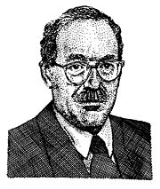
Paul Alan Yule

Encyclopedia
Paul Alan Yule is an archaeologist at the Ruprecht-Karls-Universität Heidelberg. He studied at the University of Minnesota
, New York University
and Marburg University. His main focuses are the archaeology of India
, Oman
, and the Yemen
.
Yule's dissertation, Early Cretan Seals, classifies and dates the seals from the Early and Middle Bronze Ages on Minoan Crete.
In the 1990s, with the support of Swami Omanand Saraswati, he catalogued and evaluated metallic artefacts of the so-called Copper Hoard Culture
by means of European methods for the first time, whereby numerous finds came to light in the Kanya Gurukul in Narela
/Haryana. These copper artefacts appear to be non-functional objects, probably used in ritual functions, to judge from their use-wear. A find from a cemetery in Sankarjang
may be the earliest musical instrument
in India. Yule documented the early historic fortress at Sisupalgarh
by means of a laser scanner, ground penetrating radar and a GPS receiver. Together with Corinna Borchert he uncovered illegal housing development within this nationally protected Mauryan site. From 2001-2004 in India, Yule documented so-called forts and other archaeological sites for the first time, especially in Orissa
and Chhattisgarh
.
Yule's study of the prehistory of Oman of the 1990s deals with the Bronze Age tower tombs of Jaylah on the Jebel Akhdar
, which date to the 3rd millennium BCE. The site of Samad al-Shan
sheds light on the Late Iron Age and disappears from view perhaps around 400 CE prior to the arrival of Islam
in Oman. Samad yields eastern Arabian artefacts of different periods. A further project, the cataloguing of the metal hoard find from Ibri-Selme, which he published with Gerd Weisgerber
, concentrates on the largest hoard of metallic artefacts to occur in the Near East. Stashed in an Umm an-Nar period communal tomb, these date largely to the Early Iron Age.
Yule's work at the site of Zafar
, capital of the Himyarite Tribal Confederation, in the Yemen, began in 1998 and illuminates especially on the culture of the Himyarite period (110 BCE - 525 CE). He excavated a 1.70 m high relief-statue which wears a crown that he considers to depict a Christian notable, perhaps a king. He argues that Himyarite culture is not really foreign to Islam
but actually is a sire which passed on its genes. One wonders what Islamic religion and culture would be like without this influence. Excavated finds contradict the characterisation of Himyarite culture especially visual arts as decadent - a term which can be understood in different ways.
http://digi.ub.uni-heidelberg.de/diglit/yule1981/ Online
P. Yule, The Bronze Age Metalwork of India. PBF XX,8 (Munich 1985), ISBN 3 406 30440 0
P. Yule (ed.), Studies in the Archaeology of the Sultanate of Oman, Deutsches Archäologisches Institut, Orient-Abteilung, Orient-Archäologie Bd. 2 (Rahden 1999) ISBN 3-89646-632-1
http://archiv.ub.uni-heidelberg.de/propylaeumdok/volltexte/2011/817/
P. Yule, Die Gräberfelder in Samad al Shan (Sultanat Oman) Materialien zu einer Kulturgeschichte, Deutsches Archäologisches Institut, Orient-Abteilung, Orient-Archäologie Bd. 4 (Rahden 2001) ISBN 3-89646-634-8
http://digi.ub.uni-heidelberg.de/diglit/yule2001text
P. Yule, Early Historic Sites in Orissa (Delhi 2006) ISBN 81-89645-44-7
2.php?sr_id=12&la=de Online
P. Yule, Himyar–Die Spätantike im Jemen/Himyar Late Antique Yemen (Aichwald 2007), ISBN 978-3-929290-35-6
P. Yule/W. Böhler, Sisupalgarh: an Early Historic Fortress in Coastal Orissa and its Cousins, BAVA 24, 2004, 15-29 + CD ROM, ISBN 3-8053-2518-5
http://archiv.ub.uni-heidelberg.de/savifadok/volltexte/2009/222/ Online
P. Yule/C. Borchert, Sisupalgarh/Orissa: Illegal building operations in the North-West Area, 2005,
http://archiv.ub.uni-heidelberg.de/savifadok/volltexte/2008/146/
P. Yule/A. Hauptmann/M. Hughes, The Copper Hoards of the Indian Subcontinent: Preliminaries for an Interpretation, Jahrbuch des Römisch-Germanischen Zentralmuseums Mainz 36, 1989 [1992], 193-275 ISBN 1-881094-03-0
http://archiv.ub.uni-heidelberg.de/savifadok/volltexte/2009/509/ Online
P. Yule/G. Weisgerber, The Tower Tombs at Shir, Eastern Hajar, Sultanate of Oman, Beiträge zur allgemeinen und vergleichenden Archäologie 18, 1998, 183-241, ISBN 3-8053-2518-5
http://archiv.ub.uni-heidelberg.de/propylaeumdok/volltexte/2009/291/ Online
P. Yule/G. Weisgerber, The Metal Hoard from 'Ibri/Selme, Sultanate of Oman. Prähistorische Bronzefunde XX.7 (Stuttgart 2001) ISBN 3-515-07153-9
Collected digital works of the author regarding South Asia, University of Heidelberg Project Savifah:
Collected digital works of the author regarding Arabia, University of Heidelberg Project: HeidDOK
University of Minnesota
The University of Minnesota, Twin Cities is a public research university located in Minneapolis and St. Paul, Minnesota, United States. It is the oldest and largest part of the University of Minnesota system and has the fourth-largest main campus student body in the United States, with 52,557...
, New York University
New York University
New York University is a private, nonsectarian research university based in New York City. NYU's main campus is situated in the Greenwich Village section of Manhattan...
and Marburg University. His main focuses are the archaeology of India
India
India , officially the Republic of India , is a country in South Asia. It is the seventh-largest country by geographical area, the second-most populous country with over 1.2 billion people, and the most populous democracy in the world...
, Oman
Oman
Oman , officially called the Sultanate of Oman , is an Arab state in southwest Asia on the southeast coast of the Arabian Peninsula. It is bordered by the United Arab Emirates to the northwest, Saudi Arabia to the west, and Yemen to the southwest. The coast is formed by the Arabian Sea on the...
, and the Yemen
Yemen
The Republic of Yemen , commonly known as Yemen , is a country located in the Middle East, occupying the southwestern to southern end of the Arabian Peninsula. It is bordered by Saudi Arabia to the north, the Red Sea to the west, and Oman to the east....
.
Yule's dissertation, Early Cretan Seals, classifies and dates the seals from the Early and Middle Bronze Ages on Minoan Crete.
In the 1990s, with the support of Swami Omanand Saraswati, he catalogued and evaluated metallic artefacts of the so-called Copper Hoard Culture
Copper Hoard Culture
thumb|right|Selected hoard artefacts from 1-2 South Haryana, 3-4 Uttar Pradesh, 5 Madhya Pradesh, 6-8 South Bihar-North Orissa-Bengalen.Copper Hoards describe find-complexes which occur in the northern part of India. These occur mostly in hoards large and small and are believed to date to the 2nd...
by means of European methods for the first time, whereby numerous finds came to light in the Kanya Gurukul in Narela
Narela
Narela sub-city is a tehsil, located in the North West Delhi district of NCT of Delhi, and forms the border of the Delhi state with Haryana. Situated just off the Grand Trunk Road, its location made it an important market town for the surrounding areas, during 19th century, which it still retains...
/Haryana. These copper artefacts appear to be non-functional objects, probably used in ritual functions, to judge from their use-wear. A find from a cemetery in Sankarjang
Sankarjang
Sankarjang , Orissa, India is an archaeological site near Angul, a former cemetery and settlement with large, splendid worked stones...
may be the earliest musical instrument
Musical instrument
A musical instrument is a device created or adapted for the purpose of making musical sounds. In principle, any object that produces sound can serve as a musical instrument—it is through purpose that the object becomes a musical instrument. The history of musical instruments dates back to the...
in India. Yule documented the early historic fortress at Sisupalgarh
Sisupalgarh
Sisupalgarh or Sishupalgarh are a ruined fortification in Khurda District in Orissa, India. It is the largest and best preserved early historic fortification in India.-Description:...
by means of a laser scanner, ground penetrating radar and a GPS receiver. Together with Corinna Borchert he uncovered illegal housing development within this nationally protected Mauryan site. From 2001-2004 in India, Yule documented so-called forts and other archaeological sites for the first time, especially in Orissa
Orissa
Orissa , officially Odisha since Nov 2011, is a state of India, located on the east coast of India, by the Bay of Bengal. It is the modern name of the ancient nation of Kalinga, which was invaded by the Maurya Emperor Ashoka in 261 BC. The modern state of Orissa was established on 1 April...
and Chhattisgarh
Chhattisgarh
Chhattisgarh is a state in Central India, formed when the 16 Chhattisgarhi-speaking South-Eastern districts of Madhya Pradesh gained separate statehood on 1 November 2000....
.
Yule's study of the prehistory of Oman of the 1990s deals with the Bronze Age tower tombs of Jaylah on the Jebel Akhdar
Jebel Akhdar (Oman)
The Jebel Akhdar, Jabal Akhdar or Al Jabal Al Akhdar , also known as the camals hideout, is part of the Al Hajar Mountains range in Oman, which extends about 300 km northwest to southeast, between 50-100 km inland from the Gulf of Oman coast. It is one of Oman’s most spectacular areas...
, which date to the 3rd millennium BCE. The site of Samad al-Shan
Samad al-shan
Samad al-Shan is a site in the central part of Oman in the Sharqiyah province where Late Iron Age remains were first identified, hence the Samad Period/Culture or assemblage. The site was discovered by surveyors from Harvard University . It is located 2 km east of al-Maysar...
sheds light on the Late Iron Age and disappears from view perhaps around 400 CE prior to the arrival of Islam
Islam
Islam . The most common are and . : Arabic pronunciation varies regionally. The first vowel ranges from ~~. The second vowel ranges from ~~~...
in Oman. Samad yields eastern Arabian artefacts of different periods. A further project, the cataloguing of the metal hoard find from Ibri-Selme, which he published with Gerd Weisgerber
Gerd Weisgerber
Gerd Weisgerber was an eminent German professor of mining archaeology. He was one of the first mining archaeologists of the world, who set standards in this scientific discipline...
, concentrates on the largest hoard of metallic artefacts to occur in the Near East. Stashed in an Umm an-Nar period communal tomb, these date largely to the Early Iron Age.
Yule's work at the site of Zafar
Zafar
-Given name:* Zafar Mehmood Mughal, ASC, Chairman Executive Punjab Bar Council* Zafar Bangash, Pakistani writer* Zafar Iqbal, various people* Zafar Ali Khan, Pakistani writer* Zafar Ali Naqvi, Indian politician* Zafar Saifullah, Indian politician...
, capital of the Himyarite Tribal Confederation, in the Yemen, began in 1998 and illuminates especially on the culture of the Himyarite period (110 BCE - 525 CE). He excavated a 1.70 m high relief-statue which wears a crown that he considers to depict a Christian notable, perhaps a king. He argues that Himyarite culture is not really foreign to Islam
Islam
Islam . The most common are and . : Arabic pronunciation varies regionally. The first vowel ranges from ~~. The second vowel ranges from ~~~...
but actually is a sire which passed on its genes. One wonders what Islamic religion and culture would be like without this influence. Excavated finds contradict the characterisation of Himyarite culture especially visual arts as decadent - a term which can be understood in different ways.
Publications
P. Yule, Early Cretan Seals: A Study of Chronology. Marburger Studien zur Vor und Frühgeschichte 4 (Mainz 1981), ISBN 3-8053-0490-0http://digi.ub.uni-heidelberg.de/diglit/yule1981/ Online
P. Yule, The Bronze Age Metalwork of India. PBF XX,8 (Munich 1985), ISBN 3 406 30440 0
P. Yule (ed.), Studies in the Archaeology of the Sultanate of Oman, Deutsches Archäologisches Institut, Orient-Abteilung, Orient-Archäologie Bd. 2 (Rahden 1999) ISBN 3-89646-632-1
http://archiv.ub.uni-heidelberg.de/propylaeumdok/volltexte/2011/817/
P. Yule, Die Gräberfelder in Samad al Shan (Sultanat Oman) Materialien zu einer Kulturgeschichte, Deutsches Archäologisches Institut, Orient-Abteilung, Orient-Archäologie Bd. 4 (Rahden 2001) ISBN 3-89646-634-8
http://digi.ub.uni-heidelberg.de/diglit/yule2001text
P. Yule, Early Historic Sites in Orissa (Delhi 2006) ISBN 81-89645-44-7
2.php?sr_id=12&la=de Online
P. Yule, Himyar–Die Spätantike im Jemen/Himyar Late Antique Yemen (Aichwald 2007), ISBN 978-3-929290-35-6
P. Yule/W. Böhler, Sisupalgarh: an Early Historic Fortress in Coastal Orissa and its Cousins, BAVA 24, 2004, 15-29 + CD ROM, ISBN 3-8053-2518-5
http://archiv.ub.uni-heidelberg.de/savifadok/volltexte/2009/222/ Online
P. Yule/C. Borchert, Sisupalgarh/Orissa: Illegal building operations in the North-West Area, 2005,
http://archiv.ub.uni-heidelberg.de/savifadok/volltexte/2008/146/
P. Yule/A. Hauptmann/M. Hughes, The Copper Hoards of the Indian Subcontinent: Preliminaries for an Interpretation, Jahrbuch des Römisch-Germanischen Zentralmuseums Mainz 36, 1989 [1992], 193-275 ISBN 1-881094-03-0
http://archiv.ub.uni-heidelberg.de/savifadok/volltexte/2009/509/ Online
P. Yule/G. Weisgerber, The Tower Tombs at Shir, Eastern Hajar, Sultanate of Oman, Beiträge zur allgemeinen und vergleichenden Archäologie 18, 1998, 183-241, ISBN 3-8053-2518-5
http://archiv.ub.uni-heidelberg.de/propylaeumdok/volltexte/2009/291/ Online
P. Yule/G. Weisgerber, The Metal Hoard from 'Ibri/Selme, Sultanate of Oman. Prähistorische Bronzefunde XX.7 (Stuttgart 2001) ISBN 3-515-07153-9
See also
- Zafar, YemenZafar, YemenẒafār or Dhafar is an ancient Himyarite site situated in the Yemen, some 130 km south-south-east of the capital Sana'a. Given mention in different ancient texts, there is little doubt about the pronunciation of the name...
- Samad al-ShanSamad al-shanSamad al-Shan is a site in the central part of Oman in the Sharqiyah province where Late Iron Age remains were first identified, hence the Samad Period/Culture or assemblage. The site was discovered by surveyors from Harvard University . It is located 2 km east of al-Maysar...
- Archaeology of OmanArchaeology of OmanThe present-day Sultanate of Oman lies in the south-eastern Arabian Peninsula.While traditional Oman also includes the present-day United Arab Emirates, their prehistoric remains differ from the more specifically defined 'Oman proper' which corresponds roughly with the present-day northern...
- Masnaat MariyaMasnaat MariyaMaṣna'at Māriya , Dhamar Governorate, Yemen.This pre-Islamic Himyarite archaeological site is one of the largest in the Yemen. In the local language the name means the fortress of a word the meaning of which is disputed. The site lies 11 km west of the town of Dhamar. It is important as a large...
- Copper Hoard CultureCopper Hoard Culturethumb|right|Selected hoard artefacts from 1-2 South Haryana, 3-4 Uttar Pradesh, 5 Madhya Pradesh, 6-8 South Bihar-North Orissa-Bengalen.Copper Hoards describe find-complexes which occur in the northern part of India. These occur mostly in hoards large and small and are believed to date to the 2nd...
- JaugadaJaugadaThis site was first documented in 2001 by a team from the University of Heidelberg.'-References:Paul Yule, Early Historic Sites in Orissa ISBN 81-89645-44-7...
- SisupalgarhSisupalgarhSisupalgarh or Sishupalgarh are a ruined fortification in Khurda District in Orissa, India. It is the largest and best preserved early historic fortification in India.-Description:...
External links
Zafar/Yemen Photo Archive, University of Heidelberg Project: HeidICON, since 01.03.2008,- http://heidicon.ub.uni-heidelberg.de/module/extlinks.php/pool/zafar
Collected digital works of the author regarding South Asia, University of Heidelberg Project Savifah:
- http://archiv.ub.uni-heidelberg.de/savifadok/schriftenreihen_ebene2.php?sr_id=12&la=de
Collected digital works of the author regarding Arabia, University of Heidelberg Project: HeidDOK
- http://archiv.ub.uni-heidelberg.de/propylaeumdok/schriftenreihen_ebene2.php?sr_id=5&la=de
- http://semitistik.uni-hd.de/yule/zafar-himyar/index.htm