

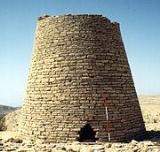
Archaeology of Oman

Encyclopedia
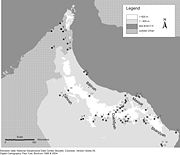
The present-day Sultanate of Oman lies in the south-eastern Arabian Peninsula
.
While traditional Oman also includes the present-day United Arab Emirates
, their prehistoric remains differ from the more specifically defined 'Oman proper' which corresponds roughly with the present-day northern provinces of the Sultanate of Oman. Differences occur between the area of the present-day U.A.E. and the Sultanate particularly after the end of the Early Iron Age. Archaeology is conditioned by the geographical situation. The amount of moisture dictates the amount and place of agriculture
and population which are possible. A variety of subsistence strategies exploit the available resources. Since archaeological field work began in the Sultanate in the early 1970s, numerous teams have worked in the Sultanate.
 Different ages are reflected in typological assemblages, Old Stone Age, New Stone Age, Copper Age
, Bronze Age
, Early Iron Age
, Late Iron Age, that is Samad Period, so-called late pre-Islamic culture and the Age of Islam. What is referred to as a period
is inferred from a regularly recurring assemblages of artefacts
. Some specialists equate periods with cultures. The names of the ages are conventional and are difficult to fix in terms of absolute years. Aside from this the development is highly regional. The archaeological assemblages of the South Province Dhofar
=Zafar differ completely from those of the central part of the country. A key barometer of industrial activity is the amount of copper production, as known from smelting refuse (slag) and metallic artefacts.
Except for the Islamic period, What all share is that they are known primarily from cemeteries, tombs and grave goods. The absolute dates for the different periods are still under study and it is difficult to assign years to the Late Iron Age of central and southern Oman.
Old Stone Age: Known primarily from survey finds.
New Stone Age: The first agricultural settlements. Known from a variety of sites, most of which lie on the coast. The most characteristic feature is the domestication of plants and animals and a shift toward settled life.
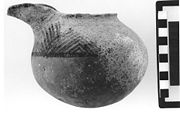
Copper Age
, Hafit: Known originally from a cemetery site on the Jebel Hafit. Typically cairns lie on top of hill crests. Copies and pottery imports from southern Mesopotamia occur. Such finds have been documented on the eastern coast of the country near Ra's al-Hadd and Ra's al-Jins. Diagnostic pottery of Jemdet Nasr
type has survived in some tombs.
Bronze Age
: The Umm an-Nar and Wadi Suq Periods. Known from numerous sites, for example respectively on the island Umm an-Nar and in the Wadi Suq. Typical are nice wheel-turned painted pottery which distinguish these two periods. Metal production grows considerably in relation to that of the preceeding Hafit Period. During the Umm an-Nar Period, large communal, free-standing tombs contain numerous interments. Other tombs are smaller and may contain one or a few interments.
 Early Iron Age: Known from different cemetery and copper
producing sites including the settlement on the Jebel Radhania, Lizq. Hand-made, hard-fired pottery. The dead are interred in exisating tombs or in hut-like free-standing ones. Copper production reaches a peak at this time which will only be surpassed in Islamic times. The chronology for this age resembles but also differs from the better known one of the present-day U.A.E. During this Iron Age paradoxically in Oman iron artefacts have not yet been recovered. In neighbouring Iran after 1200 B.C. iron weapons are characteristic.
Late Iron Age, Samad Period: The type-site of this illiterate, copper alloy and iron-using period is Samad al-Shan
. Typically, individual stone-built graves are sunk into the earth in the plain. Generally handmade pottery, some glazed imports. Some believe that at this time Oman is dominated by Parthian
and later Sasanian invaders from Iran. The contrasting theory is that resources allowed only to dominate a few coastal sites and the bulk of the population were mixed Semitic speakers. Persian presence is inferred by a few place-names on the coast. from 500 B.C. to 50 A.D. scholars believe that waves of migratory tribes from South and Central Arabia settle in Oman.
Late Pre-Islamic Northern Period: Known from different sites, for example Amla, al-Fuwayda. Such sites are partly contemporary with the Late Iron Age of Samad and other sites in the Sharqiyah.
Late Iron Age in Dhofar: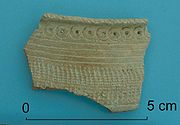 Survey and a few excavations shed light on the archaeology of the South Province of the Sultanate. The largest and best-known site is Khor Rori
- a trading fort established by the Hadhramite kingdom in the 3rd century B.C. While this site shows a mixture of artefacts, many of which are of Old South Arabian type, the surrounding countryside reveals a melange of different kinds of artefacts. Khor Rori owes its existence to the trading of aromatics, in particular frankenscense.
Islamic Age:
From the very beginning just after the arrival of Islam nothing has survived. The earliest building structures to survive date to medieval times.
http://digi.ub.uni-heidelberg.de/diglit/yule2001text
Arabian Peninsula
The Arabian Peninsula is a land mass situated north-east of Africa. Also known as Arabia or the Arabian subcontinent, it is the world's largest peninsula and covers 3,237,500 km2...
.
While traditional Oman also includes the present-day United Arab Emirates
United Arab Emirates
The United Arab Emirates, abbreviated as the UAE, or shortened to "the Emirates", is a state situated in the southeast of the Arabian Peninsula in Western Asia on the Persian Gulf, bordering Oman, and Saudi Arabia, and sharing sea borders with Iraq, Kuwait, Bahrain, Qatar, and Iran.The UAE is a...
, their prehistoric remains differ from the more specifically defined 'Oman proper' which corresponds roughly with the present-day northern provinces of the Sultanate of Oman. Differences occur between the area of the present-day U.A.E. and the Sultanate particularly after the end of the Early Iron Age. Archaeology is conditioned by the geographical situation. The amount of moisture dictates the amount and place of agriculture
Agriculture
Agriculture is the cultivation of animals, plants, fungi and other life forms for food, fiber, and other products used to sustain life. Agriculture was the key implement in the rise of sedentary human civilization, whereby farming of domesticated species created food surpluses that nurtured the...
and population which are possible. A variety of subsistence strategies exploit the available resources. Since archaeological field work began in the Sultanate in the early 1970s, numerous teams have worked in the Sultanate.
Copper Age
The Chalcolithic |stone]]") period or Copper Age, also known as the Eneolithic/Æneolithic , is a phase of the Bronze Age in which the addition of tin to copper to form bronze during smelting remained yet unknown by the metallurgists of the times...
, Bronze Age
Bronze Age
The Bronze Age is a period characterized by the use of copper and its alloy bronze as the chief hard materials in the manufacture of some implements and weapons. Chronologically, it stands between the Stone Age and Iron Age...
, Early Iron Age
Iron Age
The Iron Age is the archaeological period generally occurring after the Bronze Age, marked by the prevalent use of iron. The early period of the age is characterized by the widespread use of iron or steel. The adoption of such material coincided with other changes in society, including differing...
, Late Iron Age, that is Samad Period, so-called late pre-Islamic culture and the Age of Islam. What is referred to as a period
Period
Period may mean a full stop: a punctuation in American-English.Period or periodic may also refer to:-Science:* Orbital period, a concept in astronomy...
is inferred from a regularly recurring assemblages of artefacts
Artifact (archaeology)
An artifact or artefact is "something made or given shape by man, such as a tool or a work of art, esp an object of archaeological interest"...
. Some specialists equate periods with cultures. The names of the ages are conventional and are difficult to fix in terms of absolute years. Aside from this the development is highly regional. The archaeological assemblages of the South Province Dhofar
Dhofar
The Dhofar region lies in Southern Oman, on the eastern border with Yemen. Its mountainous area covers and has a population of 215,960 as of the 2003 census. The largest town in the region is Salalah. Historically, it was the chief source of frankincense in the world. However, its frankincense...
=Zafar differ completely from those of the central part of the country. A key barometer of industrial activity is the amount of copper production, as known from smelting refuse (slag) and metallic artefacts.
Except for the Islamic period, What all share is that they are known primarily from cemeteries, tombs and grave goods. The absolute dates for the different periods are still under study and it is difficult to assign years to the Late Iron Age of central and southern Oman.
Old Stone Age: Known primarily from survey finds.
New Stone Age: The first agricultural settlements. Known from a variety of sites, most of which lie on the coast. The most characteristic feature is the domestication of plants and animals and a shift toward settled life.
Copper Age
Copper Age
The Chalcolithic |stone]]") period or Copper Age, also known as the Eneolithic/Æneolithic , is a phase of the Bronze Age in which the addition of tin to copper to form bronze during smelting remained yet unknown by the metallurgists of the times...
, Hafit: Known originally from a cemetery site on the Jebel Hafit. Typically cairns lie on top of hill crests. Copies and pottery imports from southern Mesopotamia occur. Such finds have been documented on the eastern coast of the country near Ra's al-Hadd and Ra's al-Jins. Diagnostic pottery of Jemdet Nasr
Jemdet Nasr
Jemdet Nasr is a tell or settlement mound in Babil Governorate that is best known as the eponymous type site for the Jemdet Nasr period . The site was first excavated in 1926 by Stephen Langdon, who found proto-cuneiform clay tablets in a large mudbrick building thought to be the ancient...
type has survived in some tombs.
Bronze Age
Bronze Age
The Bronze Age is a period characterized by the use of copper and its alloy bronze as the chief hard materials in the manufacture of some implements and weapons. Chronologically, it stands between the Stone Age and Iron Age...
: The Umm an-Nar and Wadi Suq Periods. Known from numerous sites, for example respectively on the island Umm an-Nar and in the Wadi Suq. Typical are nice wheel-turned painted pottery which distinguish these two periods. Metal production grows considerably in relation to that of the preceeding Hafit Period. During the Umm an-Nar Period, large communal, free-standing tombs contain numerous interments. Other tombs are smaller and may contain one or a few interments.
Copper
Copper is a chemical element with the symbol Cu and atomic number 29. It is a ductile metal with very high thermal and electrical conductivity. Pure copper is soft and malleable; an exposed surface has a reddish-orange tarnish...
producing sites including the settlement on the Jebel Radhania, Lizq. Hand-made, hard-fired pottery. The dead are interred in exisating tombs or in hut-like free-standing ones. Copper production reaches a peak at this time which will only be surpassed in Islamic times. The chronology for this age resembles but also differs from the better known one of the present-day U.A.E. During this Iron Age paradoxically in Oman iron artefacts have not yet been recovered. In neighbouring Iran after 1200 B.C. iron weapons are characteristic.
Late Iron Age, Samad Period: The type-site of this illiterate, copper alloy and iron-using period is Samad al-Shan
Samad al-shan
Samad al-Shan is a site in the central part of Oman in the Sharqiyah province where Late Iron Age remains were first identified, hence the Samad Period/Culture or assemblage. The site was discovered by surveyors from Harvard University . It is located 2 km east of al-Maysar...
. Typically, individual stone-built graves are sunk into the earth in the plain. Generally handmade pottery, some glazed imports. Some believe that at this time Oman is dominated by Parthian
Parthia
Parthia is a region of north-eastern Iran, best known for having been the political and cultural base of the Arsacid dynasty, rulers of the Parthian Empire....
and later Sasanian invaders from Iran. The contrasting theory is that resources allowed only to dominate a few coastal sites and the bulk of the population were mixed Semitic speakers. Persian presence is inferred by a few place-names on the coast. from 500 B.C. to 50 A.D. scholars believe that waves of migratory tribes from South and Central Arabia settle in Oman.
Late Pre-Islamic Northern Period: Known from different sites, for example Amla, al-Fuwayda. Such sites are partly contemporary with the Late Iron Age of Samad and other sites in the Sharqiyah.
Late Iron Age in Dhofar:
Khor Rori
Khor Rori is an Early South Arabian archaeological site near Salalah in the Dhofar region of modern Oman. The small fortified town was founded as an outpost for the kingdom of Hadramawt in modern Yemen around the turn of our era, but the site shows signs of Hadrami settlement back to the third...
- a trading fort established by the Hadhramite kingdom in the 3rd century B.C. While this site shows a mixture of artefacts, many of which are of Old South Arabian type, the surrounding countryside reveals a melange of different kinds of artefacts. Khor Rori owes its existence to the trading of aromatics, in particular frankenscense.
Islamic Age:
From the very beginning just after the arrival of Islam nothing has survived. The earliest building structures to survive date to medieval times.
Sources
- A. Avanzini, A Port in Arabia between Rome and the Indian Ocean (3rd c. BC–5th c. AD), Rome 2008.
- D.T. Potts, The Persian Gulf in Antiquity, 2 vols., Oxford 1992
- Paul YulePaul YulePaul Harris Yule is a photographer and film maker.Born in South Africa his family emigrated to England when he was 8 years old. After studying at Aldenham School and Oxford University he became an acclaimed photojournalist and documentary film maker, founding Berwick Universal Pictures in London in...
, Die Gräberfelder in Samad al-Shan (Sultanat Oman) Materialien zu einer Kulturgeschichte. Orient-Archäologie 4, Rahden 2001, ISBN 3-89646-634-8
http://digi.ub.uni-heidelberg.de/diglit/yule2001text
- Paul YulePaul YulePaul Harris Yule is a photographer and film maker.Born in South Africa his family emigrated to England when he was 8 years old. After studying at Aldenham School and Oxford University he became an acclaimed photojournalist and documentary film maker, founding Berwick Universal Pictures in London in...
& Gerd WeisgerberGerd WeisgerberGerd Weisgerber was an eminent German professor of mining archaeology. He was one of the first mining archaeologists of the world, who set standards in this scientific discipline...
, The Metal Hoard from ‘Ibrī-Selme, Sultanate of Oman. (Prähistorische Bronzefunde xx7, Stuttgart 2001, ISBN 3-515-07153-9 - Serge Cleuziou & Maurizio Tosi, In the Shadow of the Ancestors (Muscat 2007)
- Juris ZarinsJuris ZarinsJuris Zarins is an American-Latvian archaeologist and professor at Missouri State University, who specializes in the Middle East....
, The Land of Incense. Archaeological Work in the Governorate of Dhofar, Sultanate of Oman 1990-1995, Muscat 2001.
External links
- http://www.ufg-va.uni-hd.de/forschung/yule_oman.html by the University of Heidelberg
- http://heidicon.ub.uni-heidelberg.de/pool/oman