

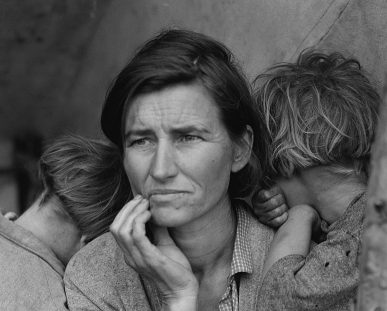

1929 Great Depression: After a steady decline in stock market prices since a peak in September, the New York Stock Exchange begins to show signs of panic.
1929 The New York Stock Exchange crashes in what will be called the Crash of '29 or "Black Tuesday", ending the Great Bull Market of the 1920s and beginning the Great Depression.
1929 Great Depression: US President Herbert Hoover announces to the U.S. Congress that the worst effects of the recent stock market crash are behind the nation and the American people have regained faith in the economy.
1930 Great Depression: US President Herbert Hoover goes before the United States Congress and asks for a US$150 million public works program to help generate jobs and stimulate the economy.
1932 The Dow Jones Industrial Average reaches its lowest level of the Great Depression, bottoming out at 41.22.
1932 Great Depression: in Washington, D.C., troops disperse the last of the "Bonus Army" of World War I veterans.
1933 Great Depression: President Franklin D. Roosevelt declares a "bank holiday", closing all U.S. banks and freezing all financial transactions.
1933 Great Depression: President Franklin D. Roosevelt submits the Emergency Banking Act to Congress, the first of his New Deal policies.
1933 Great Depression: Franklin D. Roosevelt addresses the nation for the first time as President of the United States. This was also the first of his "fireside chats".
1933 Great Depression: Banks in the U.S. begin to re-open after President Franklin D. Roosevelt mandates a "bank holiday".
1933 Great Depression: ew Deal
1938 Great Depression: In an effort to restore investor confidence, the New York Stock Exchange unveils a fifteen-point program aimed to upgrade protection for the investing public.
2001 The New York Stock Exchange reopens for trading after the September 11 Attacks, the longest closure since the Great Depression.