


Effect of caffeine on memory

Encyclopedia
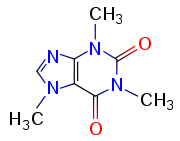
Caffeine
is a bitter, white crystalline xanthine
alkaloid
that acts as a psychoactive stimulant
drug. It can have both positive and negative effects on different aspects of memory
.
(STM) are controversial. Findings are inconsistent, as some effects of caffeine impair short-term and working memory
, whereas other studies indicate enhancing effects. Increasing our capacities of STM and working memory only seem to have beneficial impacts upon our daily lives. Increasing our memory capacities would result in retaining more information for extended periods of time and encoding information from STM to long-term memory
. However, the research consensus indicates an inhibitory effect, reducing the capacity of our short-term memory and working memory.
. The Auditory-Verbal Learning Test is a memory test that assesses recall of lists of words on single and multiple trials given through the subjects' auditory system. Caffeine subjects recalled fewer words than did control subjects, and caffeine subjects showed a greater deficit in recalling the middle- to end-portions of the lists.
effect, the idea being if caffeine was present in your system you would be less likely to experience tip of the tongue effect, or the feeling of knowing a familiar word but not being able to immediately recall it. Previous research suggested that the tip of the tongue phenomena can be corrected for with the use of caffeine, that having caffeine would help you to more quickly retrieve the word you are looking for. Current research refutes previous research accrediting evidence to priming
a phonological loop within the working memory opposed to caffeine enhancing STM capacity. A study has found that there are more correct tip of the tongue answers with a caffeine group then those of the control group. The finding is not that caffeine improves performance; it was finding the priming of the phonological-system-effecting responses. When attempting to comprise tip of the tongue effects, subjects were primed with similar-sounding words to the target word; as a result, priming the target word was reached faster regardless of caffeine intake.
, potential ethical restraints on human study procedures may lead researchers to conduct studies involving animal subjects in addition to human subjects.
or tea
in addition to consuming other substances. Their effect on cognitive processes was observed by performing numerous cognitive tasks. Words were presented and delayed recall was measured. Increased delayed recall was demonstrated by individuals with moderate to high habitual caffeine intake (mean 710 mg/week) as more words were successfully recalled compared to those with low habitual caffeine intake (mean 178 mg/week). Therefore, improved performance in long-term memory was shown with increased habitual caffeine intake due to better storage or retrieval. A similar study assessing effects of caffeine on cognition and mood resulted in improved delayed recall with caffeine intake. A dose-response relationship
was seen as individuals were able to recall more words after a period of time with increased caffeine. Improvement of long-term memory with caffeine intake was also seen in a study using rats
and a water maze
. In this study, completion of training sessions prior to performing numerous trials in finding a platform in the water maze was observed. Caffeine was consumed by the rats before and after the training sessions. There was no effect of caffeine consumption before the training sessions; however, a greater effect was seen at a low dosage immediately afterward. In other words, the rats were able to find the platform faster when caffeine was consumed after the training sessions rather than before. This implies that memory acquisition was not affected, while increases in memory retention were.
, a step-through passive-avoidance task was used, and the ability to remember the task was assessed. Caffeine was given before the task in varying doses, with low doses to start (11.55 mg/kg) and higher doses in the end (92.4 mg/kg). An apparatus including a box with a light was connected to a dark box with an electric floor. When the mice entered the dark box, a shock was released from the floor. The next day, the mice entered the apparatus again and completed the same task. Subjects that did not enter the dark box for 180 seconds were thought to have put the task in long-term memory, remembering the assignment from the previous day. However, caffeine administered at higher doses resulted in decreased retention time of the task from 180 seconds to 105 seconds. Lower doses of caffeine had little to no effect on retention time. Therefore, in this study, linear regression
analysis showed that higher doses of caffeine impaired long-term memory, suggesting a dose-response relationship between caffeine intake and retention time. Ultimately, long-term memory and caffeine intake display varying results, in human as well as animal subjects.
was assigned to several subjects at two different times. Some subjects received caffeine first, while others received a placebo. All participants were shown a word list which would eventually be tested. Two days later, the same process was repeated, with random distribution of the two substances. This was also observed in a study involving the assessment of delayed recall using a verbal memory
test. Two studies were completed using different control drinks containing caffeine.
as well as retrieval
, as opposed to no caffeine). Also important to note is that many of the effects reported were for subjects who were not regular caffeine consumers. Regular consumers of caffeine, on the other hand, showed only positive effects when it came to memory tasks. An important factor to consider is that there was fairly wide-range daily caffeine consumption previous to the study, and this could have had a significant effect on performance of the task because not everyone is at the same baseline. Another study used a much larger subject pool and found that age-related differences were quite minimal for attentional memory, but that over the long term, regular caffeine consumption was fairly beneficial to younger subjects.
levels in the body as an important factor relating to caffeine’s effect on memory performance As a result, the female menstrual cycle
(which influences overall estrogen levels in the body) may play a role in modifying the effect of caffeine on memory. Following this theory, researchers tested females within the first 5 days of their menstrual cycle and found that caffeine had a facilitative effect on female performance on a short-term memory test. A particular finding in this study relating to male memory performance revealed that at a lower dose, caffeine had an impairing effect; but at higher doses, no impairment was shown. It is also interesting to note that differing speeds of testing (words delivered slowly or quickly) in males served as a modifying factor on the effect of caffeine: higher doses aided in recall with faster presentation of words, and lower doses aided in recall with slower presentation of words. These findings are only based on a small set of data collected from selective studies on this topic, so further research in this area would be needed to gain a more clear understanding of caffeine's differing effects on male and female short-term memory.
has been known about for over a hundred years. However, there are still many unknowns that exist because only within the last decade has it been researched scientifically. As of this point in time, there is no known correlation between caffeine withdrawal and an effect on memory. There are many potential reasons for the lack of conclusions made about this issue. The main speculation is that since caffeine affects many parts of the central nervous system, this would imply that there is more than one mechanism that is activated by caffeine. It would thus require the examination of multiple activation pathways in order to determine caffeine’s specific effect on the nervous system
and consequently memory.
that caffeine withdrawal impacts memory, there are many other connections made that provide some insight into what memory effects are possible. For example, there is evidence to show that attention
decreases when experiencing caffeine withdrawal. A study had school-age children, who were regular caffeine users, go 24 hours without caffeine consumption, and the results showed a decrease in performance on reaction time of a task that required attention. Studies have also shown that regular caffeine users experience headaches and fatigue during withdrawal. One study had a group of regular caffeine users divided into three groups. Each group was designated an amount of time to avoid caffeinated products, for either 1.5 hours, 13 hours, or 7 days. The study found that, to varying degrees, all participants experienced an increase in fatigue, drowsiness, and headaches. A third study also found that among a group of participants receiving a placebo, anxiety
was experienced by participants who had prior caffeine use. This would imply that participants would also experience a deficit in memory capabilities because attention and alertness positively impact the amount of information that can be stored in both short- and long-term memory, and anxiety would be a detriment to memory retention.
Caffeine
Caffeine is a bitter, white crystalline xanthine alkaloid that acts as a stimulant drug. Caffeine is found in varying quantities in the seeds, leaves, and fruit of some plants, where it acts as a natural pesticide that paralyzes and kills certain insects feeding on the plants...
is a bitter, white crystalline xanthine
Xanthine
Xanthine , is a purine base found in most human body tissues and fluids and in other organisms. A number of stimulants are derived from xanthine, including caffeine and theobromine....
alkaloid
Alkaloid
Alkaloids are a group of naturally occurring chemical compounds that contain mostly basic nitrogen atoms. This group also includes some related compounds with neutral and even weakly acidic properties. Also some synthetic compounds of similar structure are attributed to alkaloids...
that acts as a psychoactive stimulant
Stimulant
Stimulants are psychoactive drugs which induce temporary improvements in either mental or physical function or both. Examples of these kinds of effects may include enhanced alertness, wakefulness, and locomotion, among others...
drug. It can have both positive and negative effects on different aspects of memory
Memory
In psychology, memory is an organism's ability to store, retain, and recall information and experiences. Traditional studies of memory began in the fields of philosophy, including techniques of artificially enhancing memory....
.
Short-term memory
The effects of caffeine on short-term memoryShort-term memory
Short-term memory is the capacity for holding a small amount of information in mind in an active, readily available state for a short period of time. The duration of short-term memory is believed to be in the order of seconds. A commonly cited capacity is 7 ± 2 elements...
(STM) are controversial. Findings are inconsistent, as some effects of caffeine impair short-term and working memory
Working memory
Working memory has been defined as the system which actively holds information in the mind to do verbal and nonverbal tasks such as reasoning and comprehension, and to make it available for further information processing...
, whereas other studies indicate enhancing effects. Increasing our capacities of STM and working memory only seem to have beneficial impacts upon our daily lives. Increasing our memory capacities would result in retaining more information for extended periods of time and encoding information from STM to long-term memory
Long-term memory
Long-term memory is memory in which associations among items are stored, as part of the theory of a dual-store memory model. According to the theory, long term memory differs structurally and functionally from working memory or short-term memory, which ostensibly stores items for only around 20–30...
. However, the research consensus indicates an inhibitory effect, reducing the capacity of our short-term memory and working memory.
Auditory effects within short-term memory
Caffeine’s effects in memory were also investigated in the auditory systemAuditory system
The auditory system is the sensory system for the sense of hearing.- Outer ear :The folds of cartilage surrounding the ear canal are called the pinna...
. The Auditory-Verbal Learning Test is a memory test that assesses recall of lists of words on single and multiple trials given through the subjects' auditory system. Caffeine subjects recalled fewer words than did control subjects, and caffeine subjects showed a greater deficit in recalling the middle- to end-portions of the lists.
Working memory effects
Caffeine has been thought to have some benefits when testing working memory by investigating the tip of the tongueTip of the tongue
The tip-of-the-tongue phenomenon is the failure to retrieve a word from memory, combined with partial recall and the feeling that retrieval is imminent...
effect, the idea being if caffeine was present in your system you would be less likely to experience tip of the tongue effect, or the feeling of knowing a familiar word but not being able to immediately recall it. Previous research suggested that the tip of the tongue phenomena can be corrected for with the use of caffeine, that having caffeine would help you to more quickly retrieve the word you are looking for. Current research refutes previous research accrediting evidence to priming
Priming
Priming may refer to:* Priming , a process in which the processing of a target stimulus is aided or altered by the presentation of a previously presented stimulus....
a phonological loop within the working memory opposed to caffeine enhancing STM capacity. A study has found that there are more correct tip of the tongue answers with a caffeine group then those of the control group. The finding is not that caffeine improves performance; it was finding the priming of the phonological-system-effecting responses. When attempting to comprise tip of the tongue effects, subjects were primed with similar-sounding words to the target word; as a result, priming the target word was reached faster regardless of caffeine intake.
Time-of-day effects
Short-term memory has been thought to be influenced differently throughout the day when caffeine has been ingested; in the morning, STM performance will be different than at the end of the day. As the effects of caffeine wear off, there would be some effect on STM. Three groups of caffeine intake (low, medium, and high) were compared during four daytime hours (01:00, 07:00, 13:00, 19:00). People with low caffeine intake have a decreased performance later in the day, compared to moderate and a high-level caffeine intake. Results are interesting but do not conclusively determine that caffeine impairs or improves short-term memory compared to a control group.Long-term memory
Caffeine has been shown to have positive, negative, and no effects on long-term memory. When studying the effects of this and any drugDrug
A drug, broadly speaking, is any substance that, when absorbed into the body of a living organism, alters normal bodily function. There is no single, precise definition, as there are different meanings in drug control law, government regulations, medicine, and colloquial usage.In pharmacology, a...
, potential ethical restraints on human study procedures may lead researchers to conduct studies involving animal subjects in addition to human subjects.
Positive effects of caffeine on long-term memory
Positive effects of caffeine on long-term memory have been shown in a study analyzing habitual caffeine intake of coffeeCoffee
Coffee is a brewed beverage with a dark,init brooo acidic flavor prepared from the roasted seeds of the coffee plant, colloquially called coffee beans. The beans are found in coffee cherries, which grow on trees cultivated in over 70 countries, primarily in equatorial Latin America, Southeast Asia,...
or tea
Tea
Tea is an aromatic beverage prepared by adding cured leaves of the Camellia sinensis plant to hot water. The term also refers to the plant itself. After water, tea is the most widely consumed beverage in the world...
in addition to consuming other substances. Their effect on cognitive processes was observed by performing numerous cognitive tasks. Words were presented and delayed recall was measured. Increased delayed recall was demonstrated by individuals with moderate to high habitual caffeine intake (mean 710 mg/week) as more words were successfully recalled compared to those with low habitual caffeine intake (mean 178 mg/week). Therefore, improved performance in long-term memory was shown with increased habitual caffeine intake due to better storage or retrieval. A similar study assessing effects of caffeine on cognition and mood resulted in improved delayed recall with caffeine intake. A dose-response relationship
Dose-response relationship
The dose-response relationship, or exposure-response relationship, describes the change in effect on an organism caused by differing levels of exposure to a stressor after a certain exposure time...
was seen as individuals were able to recall more words after a period of time with increased caffeine. Improvement of long-term memory with caffeine intake was also seen in a study using rats
RATS
RATS may refer to:* RATS , Regression Analysis of Time Series, a statistical package* Rough Auditing Tool for Security, a computer program...
and a water maze
Water maze
The term water maze is used for a maze that is filled with water to motivate the subject, generally a rodent, to escape. There are water-maze versions of the radial arm maze, T- and Y-mazes, etc....
. In this study, completion of training sessions prior to performing numerous trials in finding a platform in the water maze was observed. Caffeine was consumed by the rats before and after the training sessions. There was no effect of caffeine consumption before the training sessions; however, a greater effect was seen at a low dosage immediately afterward. In other words, the rats were able to find the platform faster when caffeine was consumed after the training sessions rather than before. This implies that memory acquisition was not affected, while increases in memory retention were.
Negative effects of caffeine on long-term memory
Caffeine has been shown to have negative effects on long-term memory, in particular, impairment during selected tasks. In a study with miceMICE
-Fiction:*Mice , alien species in The Hitchhiker's Guide to the Galaxy*The Mice -Acronyms:* "Meetings, Incentives, Conferencing, Exhibitions", facilities terminology for events...
, a step-through passive-avoidance task was used, and the ability to remember the task was assessed. Caffeine was given before the task in varying doses, with low doses to start (11.55 mg/kg) and higher doses in the end (92.4 mg/kg). An apparatus including a box with a light was connected to a dark box with an electric floor. When the mice entered the dark box, a shock was released from the floor. The next day, the mice entered the apparatus again and completed the same task. Subjects that did not enter the dark box for 180 seconds were thought to have put the task in long-term memory, remembering the assignment from the previous day. However, caffeine administered at higher doses resulted in decreased retention time of the task from 180 seconds to 105 seconds. Lower doses of caffeine had little to no effect on retention time. Therefore, in this study, linear regression
Linear regression
In statistics, linear regression is an approach to modeling the relationship between a scalar variable y and one or more explanatory variables denoted X. The case of one explanatory variable is called simple regression...
analysis showed that higher doses of caffeine impaired long-term memory, suggesting a dose-response relationship between caffeine intake and retention time. Ultimately, long-term memory and caffeine intake display varying results, in human as well as animal subjects.
No effect of caffeine on long-term memory
Alternatively, other studies have shown that caffeine intake has no effect on long-term memory. This was expressed in a study whereby either caffeine or a placeboPlacebo
A placebo is a simulated or otherwise medically ineffectual treatment for a disease or other medical condition intended to deceive the recipient...
was assigned to several subjects at two different times. Some subjects received caffeine first, while others received a placebo. All participants were shown a word list which would eventually be tested. Two days later, the same process was repeated, with random distribution of the two substances. This was also observed in a study involving the assessment of delayed recall using a verbal memory
Verbal memory
Verbal memory is a term used in Cognitive Psychology that refers to memory of words and other abstractions involving language.-Verbal Encoding:Verbal Encoding refers to the interpretation of verbal stimuli...
test. Two studies were completed using different control drinks containing caffeine.
Effects on young adults
The effects for this age group (15-25) were the most variable and conflicting. On the one hand, caffeine effects appear to be detrimental to short-term memory, working memory included, whereas the effects are somewhat positive for memory over the long term (for example, you remember something better many days later if you drank caffeine during encodingEncoding (Memory)
Memory has the ability to encode, store and recall information. Memories give an organism the capability to learn and adapt from previous experiences as well as build relationships. Encoding allows the perceived item of use or interest to be converted into a construct that can be stored within the...
as well as retrieval
Retrieval
Retrieval could refer to:* Information retrieval* Text retrieval* Image retrieval* Document retrieval* Music information retrieval* Medical retrieval* Data retrieval* Knowledge retrieval...
, as opposed to no caffeine). Also important to note is that many of the effects reported were for subjects who were not regular caffeine consumers. Regular consumers of caffeine, on the other hand, showed only positive effects when it came to memory tasks. An important factor to consider is that there was fairly wide-range daily caffeine consumption previous to the study, and this could have had a significant effect on performance of the task because not everyone is at the same baseline. Another study used a much larger subject pool and found that age-related differences were quite minimal for attentional memory, but that over the long term, regular caffeine consumption was fairly beneficial to younger subjects.
Effects on the middle aged
As previously stated, the most pronounced effect of caffeine on memory appears to be on middle-aged subjects (26-64). None of the studies provide reasoning for why this group would be most affected, but one could hypothesize that because of cognitive decline due to age, caffeine has a powerful effect on brain chemistry (although this would suggest the older the person, the stronger the effect of caffeine). Furthermore, this age group is most likely to be the largest consumer of caffeine. The main studies reporting this finding show that at low, acute doses of caffeine consumption, working memory only slightly affects those in this age group, while no effect is observed for younger or older subjects. The authors conclude that larger doses may be needed to produce results that are supported by previous literature, and this is an avenue for further research. Furthermore, it is argued that consumption of caffeine generally aids cognitive performance for this age group, as long one does not exceed the recommended dose of 300 mg per day.Effects on the elderly
In older adults, memory is typically best in the morning and gradually declines over the day. Those who consumed caffeine in the morning showed much better memory, both short-term and long-term than those who consumed a placebo, especially in late afternoon, where memory and attention may be most crucial to daily functioning for the elderly. This is further supported by a study which showed that adults over the age of 65 who regularly consume caffeine in the morning are much more alert and function at a higher cognitive level throughout the day. The authors conclude that it is beneficial for older adults to regularly consume average doses of caffeine in the morning to boost cognitive performance and alertness in the afternoon. Again, one should not exceed the recommended dose of about 200 mg per day, otherwise memory performance declines due to over-consumption.Conclusion
The literature shows mixed results. Overall regular caffeine consumption has a positive effect on one's short and long term memory only when consumed on a regular basis. Consumption should be daily, in moderate doses, and at around the same time, regardless of age.Sex differences
Many studies provide support for the idea that caffeine has different effect on males versus females when related to memory. These differences can be seen through a number of memory types (short-term, long-term, etc.), with various theories accounting for these differing effects.Short-term memory
Caffeine has been shown to have an impairing effect on females (but not males) in a word-list test of short-term memory. One prevailing theory which aims to explain this sex difference identifies estrogenEstrogen
Estrogens , oestrogens , or œstrogens, are a group of compounds named for their importance in the estrous cycle of humans and other animals. They are the primary female sex hormones. Natural estrogens are steroid hormones, while some synthetic ones are non-steroidal...
levels in the body as an important factor relating to caffeine’s effect on memory performance As a result, the female menstrual cycle
Menstrual cycle
The menstrual cycle is the scientific term for the physiological changes that can occur in fertile women for the purpose of sexual reproduction. This article focuses on the human menstrual cycle....
(which influences overall estrogen levels in the body) may play a role in modifying the effect of caffeine on memory. Following this theory, researchers tested females within the first 5 days of their menstrual cycle and found that caffeine had a facilitative effect on female performance on a short-term memory test. A particular finding in this study relating to male memory performance revealed that at a lower dose, caffeine had an impairing effect; but at higher doses, no impairment was shown. It is also interesting to note that differing speeds of testing (words delivered slowly or quickly) in males served as a modifying factor on the effect of caffeine: higher doses aided in recall with faster presentation of words, and lower doses aided in recall with slower presentation of words. These findings are only based on a small set of data collected from selective studies on this topic, so further research in this area would be needed to gain a more clear understanding of caffeine's differing effects on male and female short-term memory.
Long-term memory
Limited research on long-term memory and sex differences indicates no notable difference in the effect of caffeine between males and females. Sex differences have not been thoroughly covered in the literature concerning caffeine’s effect on memory. Since most studies do not report significant sex differences in this area of memory study, it is reasonable to assume that there is not strong evidence to support sex differences in caffeine’s effect on memory. Further specific research into sex differences would be needed to fully understand the impacts of this popular drug on its users.Withdrawal
Caffeine withdrawalWithdrawal
Withdrawal can refer to any sort of separation, but is most commonly used to describe the group of symptoms that occurs upon the abrupt discontinuation/separation or a decrease in dosage of the intake of medications, recreational drugs, and alcohol...
has been known about for over a hundred years. However, there are still many unknowns that exist because only within the last decade has it been researched scientifically. As of this point in time, there is no known correlation between caffeine withdrawal and an effect on memory. There are many potential reasons for the lack of conclusions made about this issue. The main speculation is that since caffeine affects many parts of the central nervous system, this would imply that there is more than one mechanism that is activated by caffeine. It would thus require the examination of multiple activation pathways in order to determine caffeine’s specific effect on the nervous system
Nervous system
The nervous system is an organ system containing a network of specialized cells called neurons that coordinate the actions of an animal and transmit signals between different parts of its body. In most animals the nervous system consists of two parts, central and peripheral. The central nervous...
and consequently memory.
Caffeine withdrawal's physiological effects
Even though there is no direct evidenceEvidence
Evidence in its broadest sense includes everything that is used to determine or demonstrate the truth of an assertion. Giving or procuring evidence is the process of using those things that are either presumed to be true, or were themselves proven via evidence, to demonstrate an assertion's truth...
that caffeine withdrawal impacts memory, there are many other connections made that provide some insight into what memory effects are possible. For example, there is evidence to show that attention
Attention
Attention is the cognitive process of paying attention to one aspect of the environment while ignoring others. Attention is one of the most intensely studied topics within psychology and cognitive neuroscience....
decreases when experiencing caffeine withdrawal. A study had school-age children, who were regular caffeine users, go 24 hours without caffeine consumption, and the results showed a decrease in performance on reaction time of a task that required attention. Studies have also shown that regular caffeine users experience headaches and fatigue during withdrawal. One study had a group of regular caffeine users divided into three groups. Each group was designated an amount of time to avoid caffeinated products, for either 1.5 hours, 13 hours, or 7 days. The study found that, to varying degrees, all participants experienced an increase in fatigue, drowsiness, and headaches. A third study also found that among a group of participants receiving a placebo, anxiety
Anxiety
Anxiety is a psychological and physiological state characterized by somatic, emotional, cognitive, and behavioral components. The root meaning of the word anxiety is 'to vex or trouble'; in either presence or absence of psychological stress, anxiety can create feelings of fear, worry, uneasiness,...
was experienced by participants who had prior caffeine use. This would imply that participants would also experience a deficit in memory capabilities because attention and alertness positively impact the amount of information that can be stored in both short- and long-term memory, and anxiety would be a detriment to memory retention.