
24th Waffen Gebirgs Division der SS

Encyclopedia
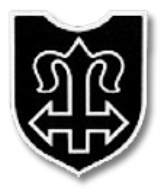
The 24th Waffen Mountain Division of the SS (Karstjäger) was the temporary designation of a military unit of Nazi Germany
during World War II. The unit was previously known as the Karstwehr Battalion. In August 1944 it was upgraded to divisional size, but this new strength was never more than theoretical and the division was later reduced to the Waffen Gebirgs Brigade der SS. Whatever its designation, the unit was primarily involved in fighting partisans in the Kras
(German:Karst) region of the Alps
on the frontiers of Slovenia
, Italy
, and Austria
; the mountainous terrain requiring specialized mountain troops and equipment. Founded in 1942, the unit consisted mainly of ethnic German volunteers from Italy
and also volunteers from Slovenia
, Croatia
, Serbia
and the Ukraine
. Although primarily focused on anti-partisan activities, it also saw action in the wake of the Italian surrender when it moved to disarm Italian troops in Tarvisio
and protect ethnic German communities in Italy. In addition, at the end of the war it successfully fought to keep passes into Austria open, allowing German units to escape the Balkans and subsequently surrender to British forces. The remains of the unit finally surrendered to the British 6th Armoured Division
on 9 May 1945, one of the last German formations to lay down its arms.
Nazi Germany
Nazi Germany , also known as the Third Reich , but officially called German Reich from 1933 to 1943 and Greater German Reich from 26 June 1943 onward, is the name commonly used to refer to the state of Germany from 1933 to 1945, when it was a totalitarian dictatorship ruled by...
during World War II. The unit was previously known as the Karstwehr Battalion. In August 1944 it was upgraded to divisional size, but this new strength was never more than theoretical and the division was later reduced to the Waffen Gebirgs Brigade der SS. Whatever its designation, the unit was primarily involved in fighting partisans in the Kras
Kras
Karst ; also known as the Karst Plateau, is a limestone borderline plateau region extending in southwestern Slovenia and northeastern Italy. It lies between the Vipava Valley, the low hills surrounding the valley, the westernmost part of the Brkini Hills, northern Istria, and the Gulf of Trieste...
(German:Karst) region of the Alps
Alps
The Alps is one of the great mountain range systems of Europe, stretching from Austria and Slovenia in the east through Italy, Switzerland, Liechtenstein and Germany to France in the west....
on the frontiers of Slovenia
Slovenia
Slovenia , officially the Republic of Slovenia , is a country in Central and Southeastern Europe touching the Alps and bordering the Mediterranean. Slovenia borders Italy to the west, Croatia to the south and east, Hungary to the northeast, and Austria to the north, and also has a small portion of...
, Italy
Italy
Italy , officially the Italian Republic languages]] under the European Charter for Regional or Minority Languages. In each of these, Italy's official name is as follows:;;;;;;;;), is a unitary parliamentary republic in South-Central Europe. To the north it borders France, Switzerland, Austria and...
, and Austria
Austria
Austria , officially the Republic of Austria , is a landlocked country of roughly 8.4 million people in Central Europe. It is bordered by the Czech Republic and Germany to the north, Slovakia and Hungary to the east, Slovenia and Italy to the south, and Switzerland and Liechtenstein to the...
; the mountainous terrain requiring specialized mountain troops and equipment. Founded in 1942, the unit consisted mainly of ethnic German volunteers from Italy
Italy
Italy , officially the Italian Republic languages]] under the European Charter for Regional or Minority Languages. In each of these, Italy's official name is as follows:;;;;;;;;), is a unitary parliamentary republic in South-Central Europe. To the north it borders France, Switzerland, Austria and...
and also volunteers from Slovenia
Slovenia
Slovenia , officially the Republic of Slovenia , is a country in Central and Southeastern Europe touching the Alps and bordering the Mediterranean. Slovenia borders Italy to the west, Croatia to the south and east, Hungary to the northeast, and Austria to the north, and also has a small portion of...
, Croatia
Croatia
Croatia , officially the Republic of Croatia , is a unitary democratic parliamentary republic in Europe at the crossroads of the Mitteleuropa, the Balkans, and the Mediterranean. Its capital and largest city is Zagreb. The country is divided into 20 counties and the city of Zagreb. Croatia covers ...
, Serbia
Serbia
Serbia , officially the Republic of Serbia , is a landlocked country located at the crossroads of Central and Southeast Europe, covering the southern part of the Carpathian basin and the central part of the Balkans...
and the Ukraine
Ukraine
Ukraine is a country in Eastern Europe. It has an area of 603,628 km², making it the second largest contiguous country on the European continent, after Russia...
. Although primarily focused on anti-partisan activities, it also saw action in the wake of the Italian surrender when it moved to disarm Italian troops in Tarvisio
Tarvisio
Tarvisio is a town in the Province of Udine, in the northeastern part of the autonomous Friuli–Venezia Giulia region in Italy...
and protect ethnic German communities in Italy. In addition, at the end of the war it successfully fought to keep passes into Austria open, allowing German units to escape the Balkans and subsequently surrender to British forces. The remains of the unit finally surrendered to the British 6th Armoured Division
British 6th Armoured Division
The 6th Armoured Division was a Second World War, British Army formation, created on 12 September 1940. The unit was initially supplied with Matilda and Valentine Tanks, which were replaced by Crusader tanks and then finally with the M4 Sherman Tank...
on 9 May 1945, one of the last German formations to lay down its arms.
Commanders
- SS-ObersturmbannführerObersturmbannführerObersturmbannführer was a paramilitary Nazi Party rank used by both the SA and the SS. It was created in May 1933 to fill the need for an additional field grade officer rank above Sturmbannführer as the SA expanded. It became an SS rank at the same time...
, Karl Marx (? Aug 1944 - 5 Dec 1944) - SS-SturmbannführerSturmbannführerSturmbannführer was a paramilitary rank of the Nazi Party equivalent to major, used both in the Sturmabteilung and the Schutzstaffel...
, Werner Hahn (5 Dec 1944 - 10 Feb 1945) - SS-OberführerOberführerOberführer was an early paramilitary rank of the Nazi Party dating back to 1921. Translated as “Senior Leader”, an Oberführer was typically a Nazi Party member in charge of a group of paramilitary units in a particular geographical region...
Adolf Wagner (10 Feb 1945 - 8 May 1945)
Order of battle
- Waffen-GebirgsjägerGebirgsjägerGebirgsjäger, in English Mountain Riflemen, is the German designation for mountain infantry. The word Jäger is the traditional German term for rifleman...
Regiment der SS 59 - Waffen-Gebirgsjäger Regiment der SS 60 (serbische nr.1)
- Waffen-Gebirgs Artillery Regiment 24
- SS Gebirgs Reconnaissance Battalion 24
- SS Gebirgs PanzerjagerPanzerjägerPanzerjäger was a branch of service of the Wehrmacht during the Second World War which were the anti-tank arm-of-service who operated anti-tank artillery, and made exclusive use of the tank destroyers which were also named Panzerjäger...
Battalion 24 - SS Gebirgs Medical Company 24
- SS Gebirgs Signal Battalion 24
- SS Gebirgs Pionier Battalion 24
- SS Gebirgs Flak Battalion 24
- SS Gebirgs Supply Battalion 24
- SS Gebirgs Field Replacement Battalion 24